Creative Space-Saving Ideas for Small Homes
Creative Space-Saving Ideas for Small Homes
TL;DR:
- Living in small spaces requires smarter storage solutions rather than less space overall.
- Vertical area utilization, multifunctional furniture, and modular systems help maximize room efficiency.
Living in a small apartment or compact house doesn’t mean living with less. It means living smarter. If you’ve ever opened a closet and had things fall on you, or felt like your living room doubles as a storage unit, you’re not alone. Creative space-saving ideas are the difference between a home that feels cramped and one that feels intentional. This article gives you ten practical, tested solutions covering furniture, storage systems, and room dividers that work for renters and homeowners alike.
Table of Contents
- Key takeaways
- 1. How to evaluate creative space-saving ideas before you buy
- 2. Murphy beds: the original space-efficient design
- 3. Alternating tread stairs for loft access
- 4. Carousel kitchen cores for compact kitchens
- 5. Vertical storage solutions and how to use them well
- 6. Modular closets and freestanding towers for renters
- 7. Bookcase room dividers that double as storage
- 8. Under-stair storage you’re probably not using
- 9. Furniture with hidden storage that actually works
- 10. Offsite storage as part of your small-home strategy
- My honest take on space-saving strategies
- How Vibemyflat helps you see your space differently
- FAQ
Key takeaways
| Point | Details |
|---|---|
| Start with criteria | Evaluate each idea by footprint, flexibility, and installation requirements before buying anything. |
| Vertical space is untapped | Most small rooms waste the zone between furniture tops and the ceiling, which holds 30–50% more storage. |
| Renters have good options | Freestanding towers, Command strips, and tension rods deliver built-in results without touching walls permanently. |
| Multifunctional beats single-use | Every piece of furniture should serve at least two purposes in a small home. |
| Incremental beats overbuilt | Adding one smart element at a time helps you understand what your space actually needs. |
1. How to evaluate creative space-saving ideas before you buy
Before spending money on furniture or storage systems, it pays to run any idea through a short checklist. The wrong solution can cost you floor space, money, and your security deposit.
Here are the factors worth measuring every time:
- Footprint vs. vertical reach. Does the item use floor space efficiently, or does it go upward where space is free?
- Modularity. Can you adjust, add to, or remove the piece as your needs change?
- Installation method. Renters need solutions that don’t require drilling into load-bearing walls or making permanent changes.
- Dual function. A storage ottoman beats a plain one. A bed with drawers beats a bed without.
- Visual weight. Open shelving, light colors, and glass fronts keep a room from feeling boxed in.
- Budget ceiling. Set a per-item budget before browsing. Small-space products often carry a premium for the “compact” label.
Pro Tip: Before purchasing anything, take a photo of the room and measure every wall, corner, and ceiling height. Decisions made with real numbers cost less than ones made from memory.
2. Murphy beds: the original space-efficient design
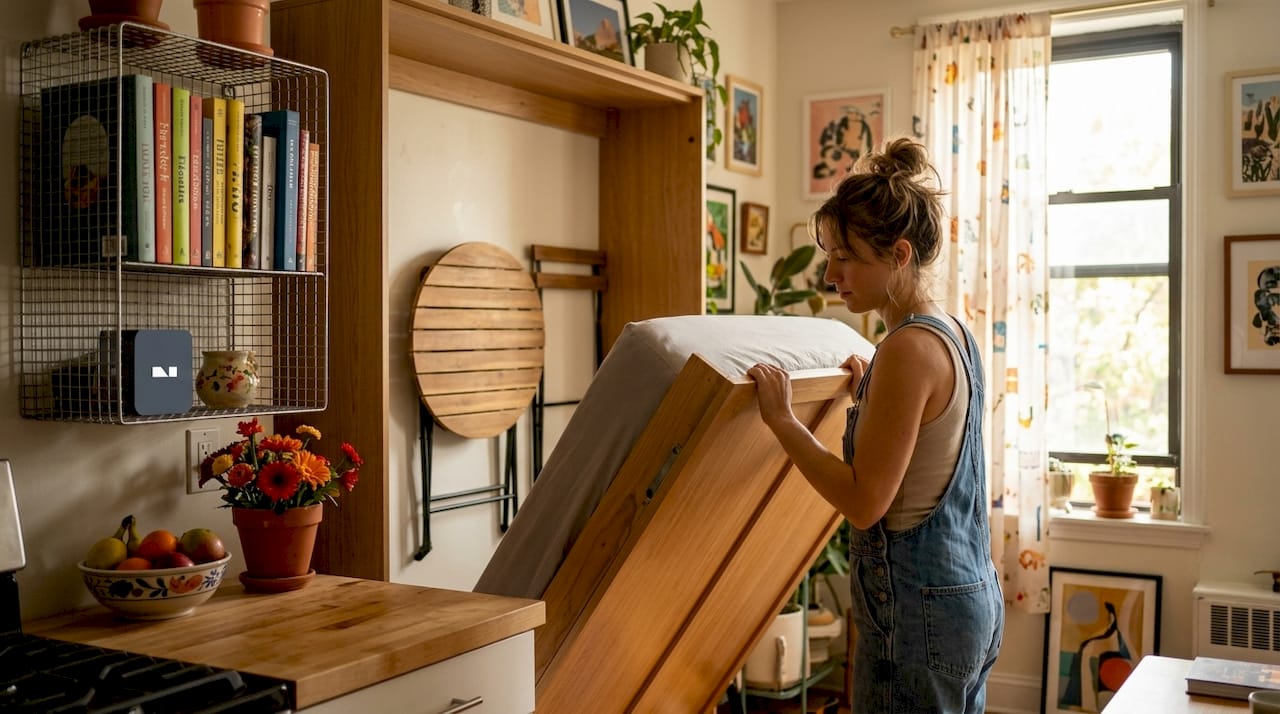
Murphy beds have earned their reputation for a reason. When folded up, a queen Murphy bed frees roughly 60 square feet of floor space. That’s enough room for a yoga mat, a desk, or a small dining table.
The catch is installation. Murphy beds require anchoring into multiple studs using heavy-duty lag bolts, and DIY installations without proper structural precision risk catastrophic failure. For renters, this is a significant hurdle since most landlords won’t approve it. For homeowners, the investment is worth it. Expect to spend between $1,500 and $4,000 installed, depending on the cabinet design.
Modern Murphy bed cabinets include fold-down desks, integrated shelving, and built-in lighting. Many manufacturers now offer models that look like a wardrobe or bookcase when closed, so guests won’t even know a bed is behind the panels.
Monthly visual inspections of the wall brackets, hinges, and piston mechanism are recommended to catch wear before it becomes a safety issue.
3. Alternating tread stairs for loft access
If your apartment or home has a loft or raised sleeping platform, traditional stairs eat up a surprising amount of floor space. Standard stair runs require 35 to 50 square feet of floor area. Alternating tread stairs bring that down to 18–25 square feet, a reduction of more than 50%.
The design works by alternating the tread depth left and right. Your left foot and right foot land on different steps, which allows a steeper angle without reducing tread comfort. They take a few days to get used to, but most people adapt quickly.
These stairs are best suited for lofts accessed once or twice a day, like a sleeping loft. They’re not ideal for main living areas with heavy foot traffic or for households with young children or older adults who need a standard rise and run. Many alternating tread stair models also incorporate storage drawers built into each step, which adds another layer of utility.
4. Carousel kitchen cores for compact kitchens
A carousel kitchen core is a rotating island or pantry unit that lets you access ingredients and tools by spinning the unit rather than walking around it. In kitchens between 6 and 10 square meters, a carousel kitchen can reduce steps taken while cooking by 20 to 30%.
That efficiency matters in tight kitchens where you might otherwise constantly shuffle between counter, pantry, and stove. A rotating carousel replaces three or four separate storage zones with one central unit. Some models sit on casters, making them easy to reposition or roll out of the way entirely.
For renters, freestanding carousel units are a win. No installation required. For homeowners, built-in lazy Susan cabinetry and pull-out pantry columns offer a more polished result. Either way, the reduction in wasted motion and storage overlap makes the kitchen feel twice as organized.
5. Vertical storage solutions and how to use them well
Most small rooms feel cluttered because items stored at eye level or below fill the visual field. Moving storage upward, and leaving intentional gaps, redirects the eye and makes rooms feel taller.
Here’s how to build a vertical storage strategy in any room:
- Floating shelves above desks and sofas. Keep them at least 18 inches above seated head height. Use them for books, baskets, and display objects.
- Tall, narrow bookcases. A unit that reaches within 12 inches of the ceiling uses vertical space without taking more floor area than a standard bookcase.
- The 60 to 90 cm zone. The space between the tops of furniture and your ceiling is often completely wasted. Using freestanding or tension shelving in this zone can increase storage capacity by 30–50%.
- Above-door ledges. A simple shelf installed above a doorframe holds bins, boxes, or seasonal items that don’t need daily access.
- Pegboards. In kitchens, offices, and entryways, pegboard systems keep items visible and accessible without touching drawer or cabinet space.
Pro Tip: Pair vertical shelving with modern apartment lighting that highlights the upper zones of a room. Upward-pointing lights draw the eye up, making ceilings feel higher.
6. Modular closets and freestanding towers for renters
Renters face a specific problem: most rental apartments have closets that weren’t designed for modern wardrobes or work-from-home gear. Custom built-ins are off the table. The good news is that freestanding systems have gotten remarkably good.
Consider these renter-friendly approaches:
- Freestanding wardrobes with internal organizers. Units from IKEA’s PAX line or similar systems can be configured to look nearly built-in. Add crown molding on top (no drilling required with adhesive mounting strips) and the effect is convincing.
- Non-permanent installation. Freestanding towers secured with museum putty or heavy-duty Command strips stay put without risking your deposit.
- Tension rods. Inside closets, tension rods add a second hanging bar instantly. No tools, no holes.
- Motion sensor lighting. A small, battery-operated motion sensor light inside a closet or cabinet costs under $15 and eliminates the frustration of rummaging in the dark.
- Overflow zones. A single under-bed storage container or a rolling cart in a corner keeps seasonal items from cluttering main storage areas.
The advice from storage designers is consistent: start with a single modular wardrobe or tower, plus one smart element, rather than buying an entire system at once. You’ll learn what you actually need after living with the first piece for a month.
7. Bookcase room dividers that double as storage
In studio apartments, the biggest challenge isn’t square footage. It’s the lack of separation between sleeping, working, and living zones. Bookcase room dividers solve this problem elegantly.
A single open-backed bookcase placed perpendicular to the wall creates visual separation while letting light pass through. Books, plants, and baskets fill the shelves while the open back maintains airflow and brightness. For more privacy, an L-shaped or box configuration encloses the sleeping area on two or three sides.
| Divider type | Cost range | Privacy level | Light impact | Best for |
|---|---|---|---|---|
| Single open bookcase | $150–$500 | Low | Minimal | Defining zones lightly |
| L-shaped configuration | $400–$900 | Medium | Moderate | Partial sleep enclosure |
| Box configuration (professional) | $1,100–$2,500 | High | Significant | Full room separation |
| Sliding panel bookcase | $600–$1,800 | Adjustable | Variable | Flexible studio layouts |
Box configuration dividers provide meaningful privacy and substantial storage at a fraction of the cost of building a wall. For any freestanding unit taller than 60 inches, secure it to the wall with anti-tip brackets. Most brackets use small screws that landlords rarely object to, especially when the hole is the size of a thumbtack.
8. Under-stair storage you’re probably not using
Homes with interior stairs often waste a triangle of space beneath them. Even a modest staircase contains 30 to 60 cubic feet of usable volume, enough to fit a small home office, a mudroom bench with cubbies, or an entire pantry.
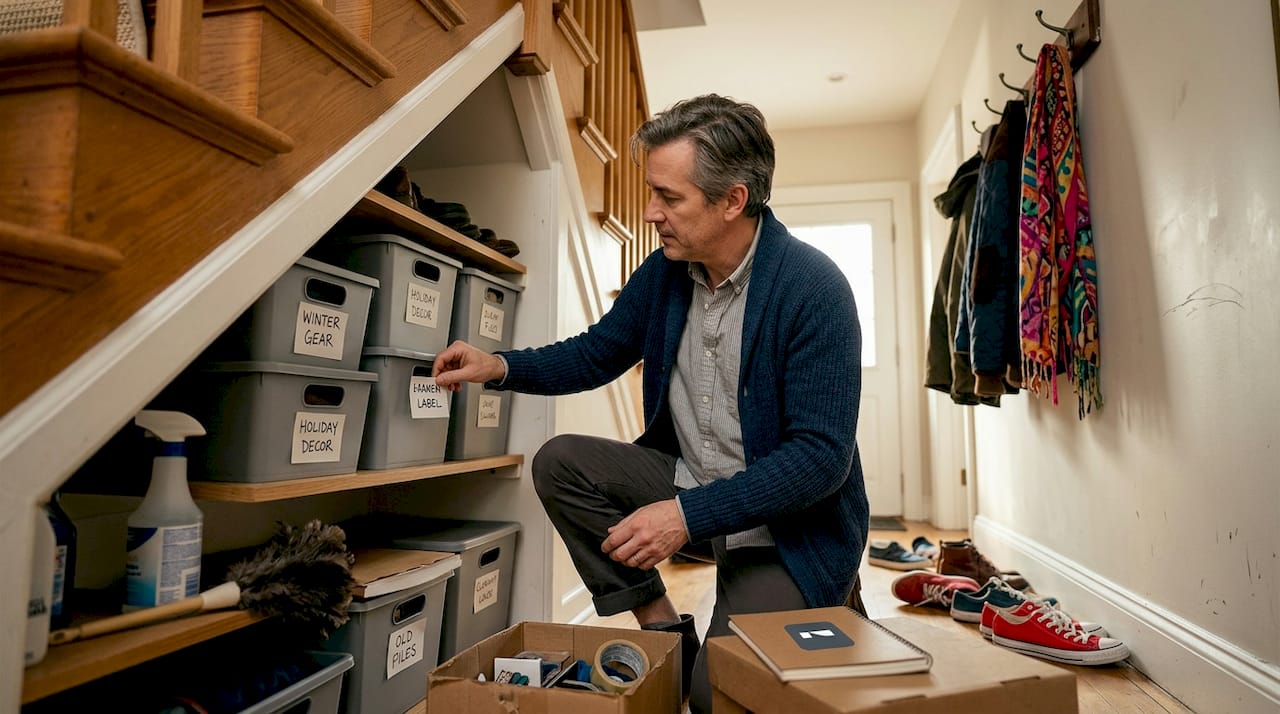
For homeowners, this is one of the highest-return small room storage solutions available because it converts dead space into functional square footage. Custom pull-out drawers fitted to the angled profile of the stair risers are the most space-efficient option. Open cubby shelving is cheaper and easier to DIY.
For renters with under-stair access in a townhouse, freestanding shelving units cut to fit the angle accomplish most of the same result without permanent modification. A curtain on a tension rod hides the contents and keeps the area looking clean.
9. Furniture with hidden storage that actually works
The best space-saving furniture earns its place twice. You sit on it, and it holds your winter blankets. You eat at it, and it unfolds to seat six.
A few pieces that consistently deliver:
- Storage ottomans. Replace a plain coffee table with a large storage ottoman topped with a tray. You get seating, a surface, and storage in one footprint.
- Beds with drawer bases. A queen bed with four deep drawers underneath replaces an entire dresser. Measure the drawer depth before buying since shallow versions waste the opportunity.
- Extendable dining tables. A table that seats two daily and expands to seat six for guests is one of the smartest compact living tips for anyone who entertains occasionally.
- Bench seating with lids. At the foot of a bed or in an entryway, a bench with a hinged lid stores shoes, bags, or sports gear out of sight.
- Wall-mounted fold-down desks. When not in use, these fold flat and disappear. They’re ideal for small bedrooms that need an occasional work surface.
10. Offsite storage as part of your small-home strategy
Most people treat offsite storage as an admission of failure. It’s not. It’s a deliberate choice to keep your living space functional rather than treating it like a warehouse.
A small storage unit costs $50 to $150 per month in most U.S. cities. For seasonal items like holiday decorations, camping gear, or ski equipment that you use three or four times a year, that cost trades well against the daily frustration of maneuvering around them at home.
The key is being intentional. Offsite storage works best when combined with interior renovation planning that accounts for what stays home and what doesn’t. The moment your storage unit becomes a place where things go to be forgotten, it stops serving its purpose.
My honest take on space-saving strategies
I’ve seen homeowners spend $8,000 on a custom closet system only to find that half the features go unused. The velvet jewelry drawer sounds great until you realize you do most of your jewelry selection in the bathroom.
In my experience, the best approach is restraint followed by observation. Move into a space, live in it for 60 days, and notice where friction actually occurs. Where do you lose things? Where does clutter collect? Those are the spots that need a solution. Everywhere else is probably fine.
The insight that resonates most from working with renters is this: adding one smart storage element at a time helps you understand your real needs and avoids wasted money. A single freestanding tower and a set of under-bed bins will teach you more about your storage habits than any showroom visit.
Style matters too. A beautifully organized shelf you’re proud of gets maintained. A bulky system you resent gets ignored. Pick solutions that fit your aesthetic, not just your floor plan.
— Hello
How Vibemyflat helps you see your space differently
Planning space-saving changes is easier when you can see the result before committing to it. Vibemyflat’s AI photo editing platform lets you upload a photo of any room and describe the changes you want, whether that’s adding floor-to-ceiling shelving, changing wall colors to make a room feel larger, or previewing how a Murphy bed cabinet might look closed.

Results come back in under 30 seconds, and the platform works on any device. For anyone unsure whether a bookcase divider will overwhelm a studio or whether dark shelving will work against a light wall, Vibemyflat removes the guesswork. You can also explore interior design tips and tools on the Vibemyflat blog before making any purchase. Start visualizing your ideal layout at Vibemyflat.
FAQ
What is the best space-saving furniture for small rooms?
Furniture that serves more than one purpose delivers the most value in small rooms. Storage beds, storage ottomans, and extendable dining tables consistently rank among the best space-saving furniture options because they replace multiple single-use pieces.
How do renters maximize space without damaging walls?
Renters can use freestanding towers, tension rods, and Command strips to build organized storage systems without drilling. Securing units with museum putty or anti-tip brackets keeps things stable without risking a security deposit.
How much space do alternating tread stairs save?
Alternating tread stairs reduce the floor footprint for loft access to just 18 to 25 square feet, compared to 35 to 50 square feet for traditional stairs. That’s a savings of more than 50% of floor area.
Are bookcase room dividers safe in apartments?
Yes, when secured properly. Any freestanding unit taller than 60 inches should be anchored with anti-tip hardware. Box configuration dividers professionally installed run $1,100 to $2,500 and provide strong structural stability along with meaningful privacy.
How do you maximize vertical storage in a small room?
Use floating shelves, tall narrow bookcases, and the often-ignored zone between furniture tops and the ceiling. Combining vertical storage with upward-pointing lighting makes the room feel taller and less cluttered.