Design Visualization Trends 2026: What Pros Need to Know
Design Visualization Trends 2026: What Pros Need to Know

TL;DR:
- Design visualization in 2026 is driven by AI collaboration, immersive real-time rendering, and accessibility-focused design. These trends streamline client presentations, emphasizing quick concept exploration, interactive walkthroughs, and systemic ecological thinking. Success depends on cultivating visual judgment and establishing clear design systems to maintain consistency.
Design visualization in 2026 is defined by three forces: AI collaboration, immersive real-time rendering, and accessibility-first thinking. Explaining design visualization trends 2026 means understanding how these forces are reshaping every stage of the client presentation process, from early concept sketches to final walkthroughs. AI-driven design has reached a 93% adoption rate among professional designers this year. That number signals a profession-wide shift, not a niche experiment. For real estate agents, interior designers, and marketers, the practical question is no longer whether to adopt these tools. The question is how to use them well.
What are the top AI-driven design visualization trends reshaping workflows in 2026?
AI has moved from a novelty to a core collaborator in design visualization. The shift changes what designers spend time on and what clients expect to see. AI helps with early concepts, material variations, and visual direction, compressing concept phases that once took days into hours. For real estate professionals, that speed directly affects how quickly a listing can go to market with polished visuals.
The practical gains show up in three specific areas:
- Generative concept exploration. AI tools generate multiple design directions from a single brief. Designers can show clients three distinct material palettes or lighting schemes before committing to a single render.
- Real-time material swapping. Platforms now allow clients to change finishes, wall colors, and furniture during a presentation. This replaces the old cycle of requesting revisions and waiting days for updated renders.
- Automated visual consistency checks. AI flags when generated assets drift from an established brand or style guide, catching inconsistencies before they reach the client.
The risk in this workflow is real. The biggest pitfall of AI visualization adoption is lacking orchestration skills, which leads to inconsistent visuals and diluted brand identity. A designer who generates 50 AI images without a coherent visual system ends up with a portfolio that looks like it was made by five different people.
Designers are evolving from pixel-pushers to orchestrators, and cultivating taste to validate AI output is now a key competitive advantage. The designers who thrive in 2026 are the ones who know which AI output to keep and which to discard.
Pro Tip: Build a visual brief before you open any AI tool. Define your color palette, material language, and spatial mood in writing. This gives you a filter for evaluating AI output instead of accepting whatever looks impressive at first glance.
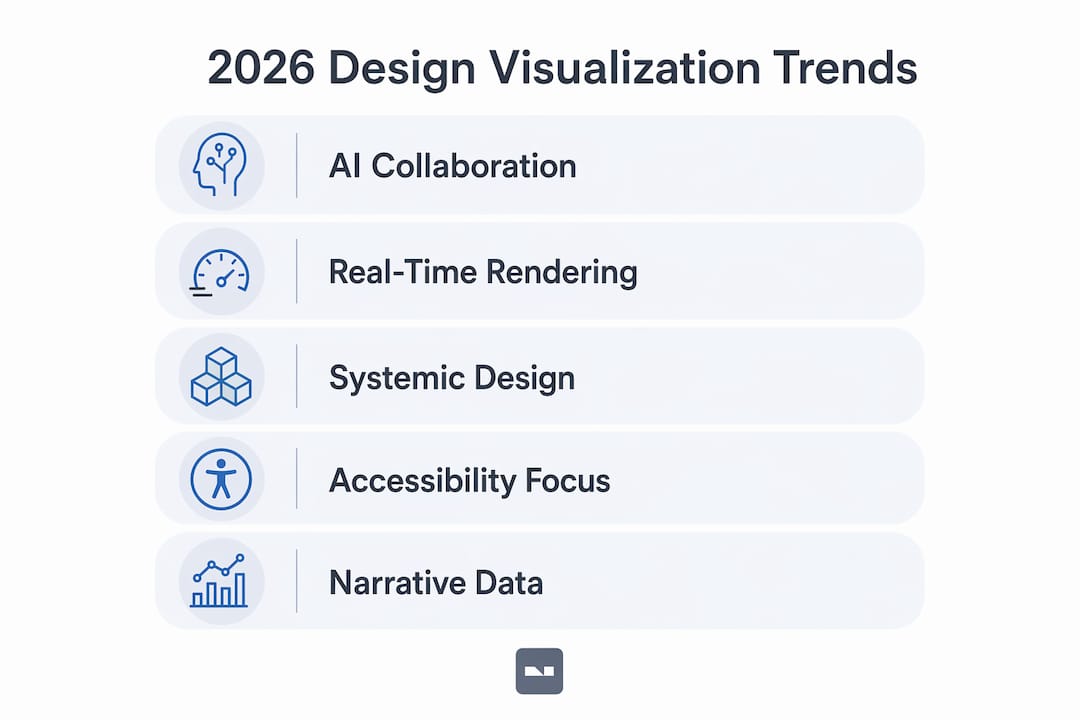
How are immersive and real-time technologies transforming client experiences?
Architectural visualization is shifting from polished stills to interactive, real-time workflows incorporating AI, VR, and AR technologies. Static renderings still have a place, but clients increasingly expect to walk through a space before it is built. That expectation is reshaping how interior designers and real estate developers structure their presentation pipelines.
The technologies driving this shift fall into a clear progression:
- 360-degree panoramas. The entry point for interactive visualization. Clients navigate a space using a browser or mobile device. Production time is low, and the format works across all devices without specialized hardware.
- Real-time rendering with gaming engines. Unreal Engine and Unity are now standard tools in high-end architectural visualization studios. They allow lighting, materials, and furniture to update in real time during a client meeting.
- AR overlays for existing spaces. Augmented reality places proposed furniture or finishes into a client’s actual room using a smartphone camera. This format is particularly effective for renovation projects where the client already lives in the space.
- Full VR walkthroughs. The most immersive format. Clients wear a headset and move through a space at 1:1 scale. This format is most valuable for complex spatial planning decisions, such as evaluating ceiling heights or the flow between rooms.
Transitioning to real-time interactive walkthroughs requires integrating gaming-engine workflows early in the pipeline to minimize costly re-renders. Studios that bolt on interactivity at the end of a project pay a significant time penalty. The geometry and material setup for a gaming engine differs from a traditional render pipeline, and retrofitting late in production is expensive.
The rise of “Responsive Nature” design, which dissolves boundaries between interior and garden by simulating light, water, and sound impact over time, makes immersive formats even more valuable. A static image cannot communicate how afternoon light moves across a living room floor. A real-time walkthrough can. For designers working on luxury interior visualization, this distinction is the difference between a client who approves a design and one who asks for another round of revisions.

Pro Tip: If your studio is new to gaming-engine workflows, start with a single room scene in Unreal Engine before committing to a full project. The learning curve is steep, but a contained test project reveals pipeline issues without derailing a client deadline.
What systemic design and accessibility trends influence visualization style in 2026?
Systemic thinking has become the dominant design philosophy of 2026. Design focus has shifted toward systemic thinking with “living structures” designed for ecological and psychological well-being, based on analysis of over 10,000 global design submissions. This means buildings and interiors are no longer evaluated purely on aesthetics. They are evaluated on how they affect air quality, acoustic comfort, circadian rhythms, and social interaction.
For visualization professionals, this shift changes what a render needs to communicate. A kitchen visualization in 2026 might need to show natural ventilation paths, not just cabinet finishes. A living room render might need to demonstrate how the space transitions from morning to evening light.
Accessibility pressures are reshaping interface design with equal force:
- ADA-related litigation in the US increased 14% year over year, pushing designers away from decorative motion effects toward calm, transparent interfaces.
- Visualization platforms are removing autoplay animations and replacing them with user-controlled interactions.
- Color contrast standards are tightening, affecting how property listings and design presentations are formatted for web delivery.
| Design element | Pre-2026 approach | 2026 approach |
|---|---|---|
| Motion in interfaces | Decorative, autoplay animations | User-triggered, purposeful motion only |
| Color contrast | Aesthetic preference | WCAG 2.1 AA compliance minimum |
| Spatial storytelling | Photorealistic stills | Ecological and sensory context included |
| Navigation | Feature-rich, complex menus | Calm, minimal, accessibility-first |
The consumer backlash against complexity is accelerating this shift. A move toward “authentic imperfection” and intuitive user experiences reflects a broader rejection of overdesigned interfaces. Clients and end users want visualization tools that feel immediate and honest, not ones that require a tutorial. For real estate marketers, this means property presentation platforms need to prioritize clarity over visual spectacle.
How do data-driven narratives improve design presentations and decisions?
Narrative-driven data and clarity-first charts enhance client understanding and decision-making in design presentations. The shift is away from dense data dashboards and toward single-insight visuals that answer one question clearly. A chart showing energy savings from a proposed HVAC system communicates more effectively when it leads with the headline number, not the underlying dataset.
Successful interior visualization prioritizes narrative-driven data that delivers headline impact about energy savings and spatial efficiency over pure photorealism. This is a significant reframe for designers who have spent years perfecting render quality. The most persuasive presentation in 2026 combines a photorealistic image with a single data point that answers the client’s primary concern.
The practical shift looks like this in real estate and interior design presentations:
- Executive summaries replace data dumps. A one-page visual summary with three headline insights outperforms a 40-slide deck in client approval meetings.
- Before-and-after comparisons with metrics. Showing a space transformation alongside square footage efficiency or natural light improvement data closes decisions faster than aesthetics alone.
- AI-generated custom visuals. AI tools now generate charts and infographics tailored to a specific client’s priorities, replacing generic templates with presentation-ready graphics built around the project’s key selling points.
The AI-powered design visualization workflow that combines photorealistic rendering with narrative data is becoming the standard for high-value property presentations. Designers who master this combination win more approvals with fewer revision cycles. For marketers, the implication is direct: the visual story needs a data spine, not just beautiful images.
Pro Tip: Lead every client presentation with one number that answers their biggest question. If the client cares about resale value, open with the projected value increase. If they care about energy costs, lead with the efficiency gain. The visual supports the number, not the other way around.
Key takeaways
Design visualization in 2026 requires AI orchestration skills, real-time rendering capabilities, and narrative-driven data to win client approvals and stay competitive.
| Point | Details |
|---|---|
| AI adoption is universal | 93% of professional designers use AI tools; the differentiator is now orchestration, not access. |
| Real-time rendering is the new standard | Gaming engines like Unreal and Unity have replaced static renders in high-end visualization pipelines. |
| Accessibility is a legal requirement | ADA litigation rose 14% year over year, making calm, contrast-compliant interfaces a business necessity. |
| Narrative data wins approvals | Headline-driven data summaries outperform complex dashboards in client decision-making. |
| Systemic design changes what renders must show | Ecological and sensory context is now part of what a visualization needs to communicate. |
The uncomfortable truth about AI and design taste
The conversation around AI in design visualization tends to focus on speed and output volume. That framing misses the real challenge. The designers I see struggling in 2026 are not the ones who cannot use AI tools. They are the ones who cannot edit AI output with confidence.
Taste is not a soft skill. It is the ability to look at 20 AI-generated renders and know immediately which three are worth showing a client. That judgment comes from years of studying light, proportion, material, and spatial flow. AI does not develop that judgment. It generates options. The human decides which options are good.
The systemic design shift makes this even more demanding. A render that communicates ecological well-being requires the designer to understand what ecological well-being actually looks like in a space. AI can simulate morning light. It cannot tell you whether that light serves the occupant’s circadian rhythm without a designer who understands the question.
Design debt accumulates when AI-generated assets lack unified oversight, and the studios I have watched struggle most are the ones that adopted AI tools without building a design system to govern the output. The fix is not complex. A shared style guide, a defined material library, and a clear approval process for AI-generated assets prevent the drift that makes a studio’s work look inconsistent over time.
My practical advice: invest in your visual judgment as aggressively as you invest in learning new tools. Read about 2026 interior design art trends, study what clients respond to, and build a personal reference library of work you admire. That library becomes your filter for everything AI produces.
— Hello
How Vibemyflat fits into your 2026 visualization workflow
Real estate agents and interior designers need visualization results that are fast, clear, and client-ready. Vibemyflat delivers exactly that through AI-driven photo editing that processes changes in under 30 seconds.
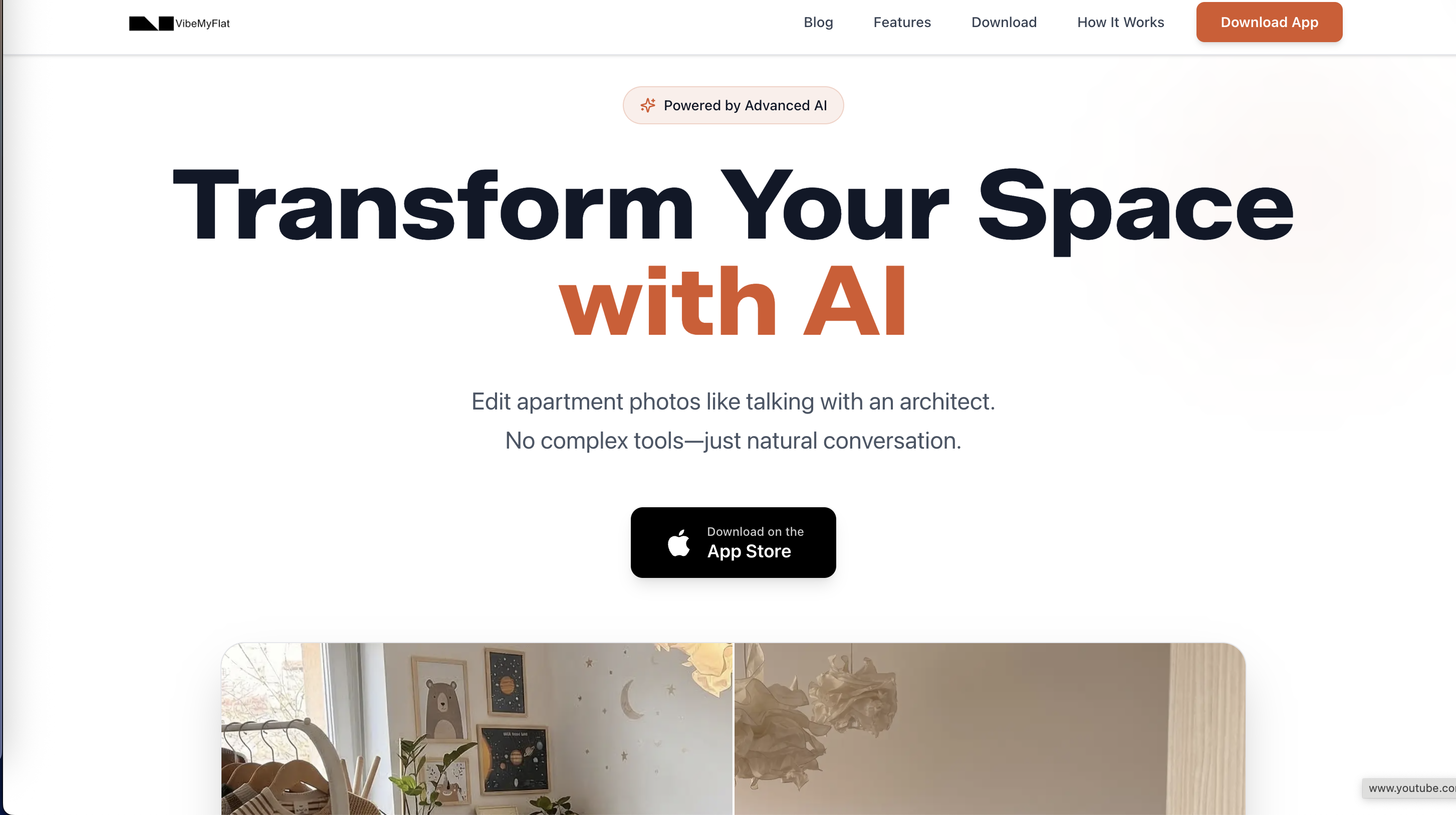
Describe the change you want in plain language, and Vibemyflat’s AI applies it directly to your property photo. Change wall colors, update lighting, or swap furniture styles without touching complex software. The platform works on iOS, Android, and web, so your team can prepare client presentations from anywhere. For professionals who need to apply design principles in real estate visualization without a full rendering pipeline, Vibemyflat is the practical tool that closes the gap between concept and client approval. Visit Vibemyflat to see what your spaces can look like.
FAQ
What are the top design visualization trends in 2026?
The top trends are AI-assisted rendering, real-time interactive walkthroughs using gaming engines like Unreal and Unity, and narrative-driven data presentations. Accessibility-first interface design and systemic ecological thinking are also reshaping how visualizations are built and presented.
How has AI changed design visualization workflows?
AI adoption among designers has reached 93% in 2026, shifting the designer’s role from production to orchestration. AI accelerates concept generation and material variation, but human judgment remains the critical filter for quality and brand consistency.
Why does accessibility matter for design visualization platforms?
ADA-related litigation in the US rose 14% year over year, making accessibility compliance a legal and business requirement. Visualization platforms are replacing decorative animations with user-controlled interactions and meeting WCAG 2.1 color contrast standards.
What is narrative-driven data in design presentations?
Narrative-driven data means leading a presentation with a single headline insight, such as an energy savings figure or spatial efficiency gain, rather than a complex data dashboard. This approach improves client understanding and speeds up approval decisions.
How do I use AI visualization tools without losing brand consistency?
Build a design system before generating AI assets. Define your color palette, material library, and spatial style in a shared document, then use that system to evaluate and filter every AI output before it reaches a client.