Furniture Placement in Listings: What Actually Sells Homes
Furniture Placement in Listings: What Actually Sells Homes
TL;DR:
- Furniture placement greatly influences how buyers perceive a property by highlighting room purpose and scale. Proper arrangement guides the eye to focal points and creates inviting zones, leading to faster and higher-value sales. Virtual staging offers a cost-effective alternative, enabling quick, impactful updates without physical setup.
Furniture placement is the single most controllable factor in how buyers perceive a property before they ever walk through the door. The role of furniture placement in listings goes far beyond aesthetics. It shapes how buyers read a room, how large a space feels, and whether a listing photo stops a scroll or gets skipped. Staged homes sell 73% faster and often achieve 5%–23% over asking price compared to non-staged properties. That gap is not about luck or location. It is about deliberate furniture layout decisions made before the camera shutter clicks.
How does furniture placement affect buyer perception?
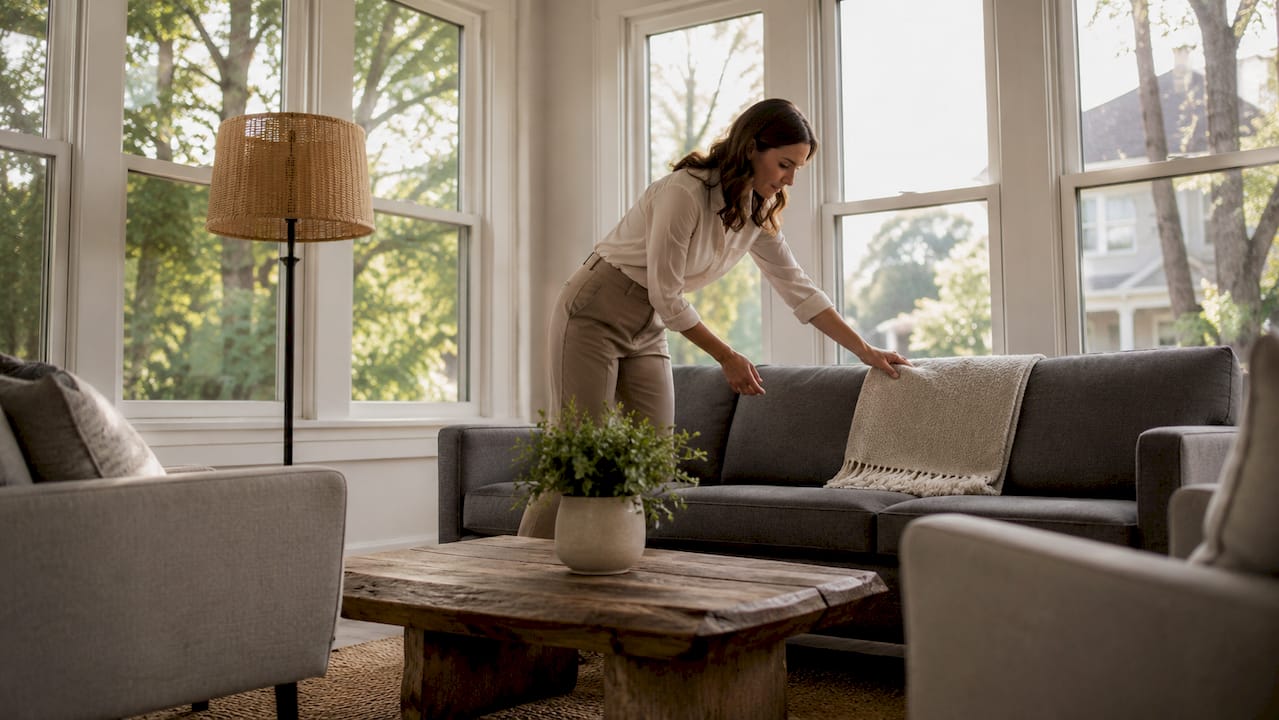
The first online photo is the new first showing. Buyers scroll past listings without effective furniture placement because they cannot read the room’s purpose or scale. A living room with a sofa shoved against the wall and a bare center tells buyers nothing about how to live there. A room with a defined seating group, a rug anchoring the arrangement, and clear sightlines tells a story in under three seconds.
Furniture placement guides the buyer’s eye toward focal points. A fireplace, a window with natural light, or a feature wall all become anchors when furniture is arranged to face them. Without that direction, the eye wanders and the room feels unresolved. Buyers interpret that visual confusion as a problem with the property itself, not the staging.
“Furniture placement is a strategic tool to reduce buyer cognitive load by creating distinct zones that narrate room purpose.” — The Art of Furniture Placement
Staged listings drive 3.2 times more qualified buyer inquiries than non-staged ones. More inquiries mean more showings, and more showings mean faster offers. The furniture layout in your listing photos is doing active sales work every hour the listing is live online.
Key psychological effects of strong furniture arrangement include:
- Defined function zones tell buyers exactly what each area is for, removing guesswork.
- Focal point alignment draws the eye to the room’s best feature first.
- Proportional scale makes rooms feel larger and more livable than empty or overcrowded spaces.
- Visual flow creates a sense of ease that buyers associate with comfort and quality.
What are the key rules for effective furniture arrangement?
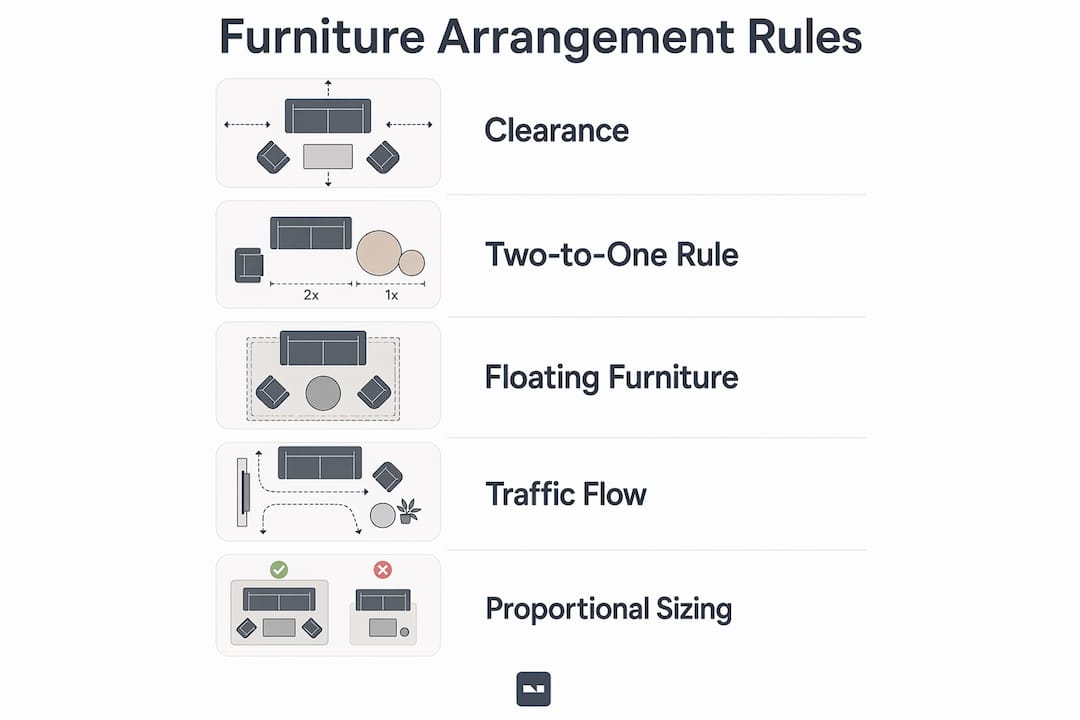
Effective furniture arrangement follows a small set of principles that professional stagers apply consistently. These are not style preferences. They are spatial rules that affect how buyers physically and emotionally respond to a room.
Traffic flow and clearance
Optimal traffic flow requires 30–36 inches of clearance between furniture pieces. That measurement is not arbitrary. It matches the average shoulder width of an adult walking comfortably through a space. When clearance drops below that, rooms feel cramped in photos and suffocating in person. Buyers register that discomfort immediately, even if they cannot name the cause.

The two-to-one rule and proportional sizing
The two-to-one rule pairs one sofa with two chairs, anchored by a rug, to create a balanced and inviting seating area. This grouping works because it creates a conversation zone with visual symmetry. The coffee table should be approximately two-thirds the length of the sofa to maintain visual harmony. A table that is too small looks like an afterthought. A table that is too large blocks movement and dominates the frame.
Floating furniture away from walls
Avoid placing all furniture against walls. This is one of the most counterintuitive rules in staging, but it is consistently validated by professional stagers and interior designers. Pushing furniture to the perimeter creates a hollow center that reads as empty and cold in photos. Pulling pieces inward to form conversational groupings creates intimacy and proportion, even in smaller rooms.
Pro Tip: In a small bedroom, angle the bed slightly away from the corner wall and add a bedside table on each side. This simple adjustment makes the room read as larger and more balanced in listing photos.
Additional furniture arrangement tips for listing success:
- Use a rug to anchor each seating or dining zone. Rugs define space without adding visual weight.
- Keep nightstands matching in size and height to signal order and care.
- Remove at least one piece of furniture from every room before photographing. Most rooms are overfurnished.
- In open-plan spaces, use furniture to create distinct zones for living, dining, and working.
How does virtual staging compare to physical staging?
Virtual staging has moved from a niche workaround to a mainstream listing strategy. The numbers explain why. Virtual staging yields an ROI from 2,400% to 9,800% and helps homes sell 38 days faster on average. Physical staging requires renting furniture, coordinating delivery, and maintaining the setup through multiple showings. Virtual staging requires a photo and a clear brief.
The average cost of virtual staging runs $282 per listing. Physical staging for a mid-size home can run several thousand dollars per month. For vacant properties especially, virtual staging is the most cost-efficient way to show buyers how a space functions. Empty rooms offer no size or function cues to buyers. A bare living room with white walls and hardwood floors gives buyers nothing to anchor their imagination to.
| Staging method | Average cost | Key benefit | Best use case |
|---|---|---|---|
| Physical staging | $1,500–$4,000+ per month | Tangible, in-person impact | Occupied homes, luxury listings |
| Virtual staging | ~$282 per listing | High ROI, fast turnaround | Vacant homes, budget-conscious sellers |
| Self-staging | Minimal | Uses existing furniture | Occupied homes with good existing pieces |
Pro Tip: For vacant listings, prioritize virtual staging for the living room and master bedroom first. These two rooms have the highest impact on buyer perception and online engagement.
Platforms like Vibemyflat make virtual staging accessible without requiring design expertise. Agents and homeowners can describe the changes they want in plain language and receive professionally edited results in under 30 seconds. That speed matters when a listing needs to go live quickly. You can read more about the advantages of virtual home editing to understand the full scope of what digital staging can do for a listing.
What furniture placement mistakes hurt listings most?
Poor furniture layout is one of the most common reasons listings underperform. The mistakes are predictable, and most are easy to fix before the photographer arrives.
-
Oversized furniture. A sectional sofa that fills 80% of a living room makes the room look small in photos, even if the square footage is generous. Scale furniture to the room, not to personal preference.
-
Cluttered arrangements. Poor furniture placement leads to buyer cognitive overload, causing undervaluation or disinterest. Too many pieces, too many textures, and too many focal points compete for attention and exhaust the viewer.
-
Ignoring traffic flow. Furniture that blocks natural pathways creates friction. Buyers touring a home in person will feel it physically. Buyers viewing photos will sense it visually as a crowded, hard-to-read frame.
-
No clear focal point. A room without a visual anchor feels purposeless. Every room needs one dominant feature that furniture is arranged to support, whether that is a fireplace, a window, or a statement piece of art.
-
Misrepresenting room scale. Using a tiny dining table in a large dining room, or a king bed in a small bedroom, gives buyers a false read on the space. When they arrive in person and the proportions feel wrong, trust erodes.
Pro Tip: Walk through each room with your phone camera before the professional photographer arrives. If the room looks crowded or confusing on a small screen, it will look worse in the final listing photos. Remove pieces until the frame feels open.
The importance of furniture placement becomes most visible when you compare two photos of the same room. One with furniture pushed to the walls and one with a floating conversational group. The second photo consistently generates more saves, more clicks, and more showing requests. The room did not change. The arrangement did.
Key Takeaways
Strategic furniture placement is the most direct way to increase buyer engagement, listing inquiries, and final sale price without changing the property itself.
| Point | Details |
|---|---|
| Staging accelerates sales | Staged homes sell 73% faster and often achieve 5%–23% over asking price. |
| Arrangement shapes perception | Floating furniture groupings and clear focal points make rooms feel larger and more livable. |
| Traffic flow is measurable | Maintain 30–36 inches of clearance between pieces to avoid cramped, friction-filled layouts. |
| Virtual staging delivers ROI | At an average cost of $282 per listing, virtual staging yields ROI up to 9,800%. |
| Mistakes are costly | Oversized furniture, clutter, and missing focal points cause buyer disinterest and undervaluation. |
Why I think most sellers underestimate furniture placement
Most sellers treat furniture as a background detail. They focus on paint color, curb appeal, and price. Furniture layout is treated as something to tidy up, not something to engineer. That is a costly mistake, and I have seen it play out repeatedly in listings that sat on the market longer than they should have.
The counterintuitive truth is that buyers do not consciously notice good furniture placement. They just feel comfortable. They linger. They start mentally placing their own belongings. That emotional response is the goal, and it is entirely manufactured by where you put the sofa. Bad placement, on the other hand, is noticed immediately. Buyers feel crowded, confused, or underwhelmed, and they move on to the next listing.
What I find most interesting is how much virtual staging has changed the calculus for sellers who cannot afford or do not want to deal with physical staging. The ROI data is not marginal. It is dramatic. A $282 investment that helps a home sell 38 days faster and at a higher price is not a decoration decision. It is a financial one. Sellers and agents who treat it that way consistently outperform those who do not.
The apartment staging guide for sellers is worth reading if you are working with smaller or multi-unit properties. The principles are the same, but the constraints are different, and the margin for error is smaller.
— Hello
Vibemyflat makes furniture placement work in every listing
Getting furniture placement right in listing photos used to require a professional stager, a photographer, and a full day of setup. Vibemyflat changes that equation for agents and homeowners who need results without the overhead.

With Vibemyflat, you describe the changes you want in plain language and the AI delivers professionally edited interior photos in under 30 seconds. Rearrange virtual furniture, update lighting, change wall colors, and create the kind of listing-ready interior photos that generate 40% more buyer interest. Whether you are staging a vacant property or refreshing an occupied home, Vibemyflat gives you the tools to present every room at its best. Visit vibemyflat.com to see what your listing could look like.
FAQ
How much does furniture placement affect sale price?
Staged homes with deliberate furniture placement frequently achieve 5%–23% over asking price compared to non-staged properties. The layout directly influences how buyers perceive value and livability.
What is the correct clearance between furniture pieces?
Professional stagers recommend 30–36 inches of clearance between furniture pieces to maintain comfortable traffic flow and prevent rooms from feeling cramped in person or in photos.
Is virtual staging as effective as physical staging?
Virtual staging achieves comparable results for online listings and costs significantly less, averaging $282 per listing versus several thousand dollars for physical staging. It is particularly effective for vacant homes.
Why should furniture float away from walls?
Furniture pushed against walls creates a hollow center that reads as cold and empty in listing photos. Floating pieces inward to form conversational groupings makes rooms feel warmer, larger, and more purposeful.
How many inquiries does staged furniture generate?
Staged listings drive 3.2 times more qualified buyer inquiries than non-staged ones, which directly accelerates the path from listing to accepted offer.