How AI Improves Home Renovations: A Practical Guide
How AI Improves Home Renovations: A Practical Guide

TL;DR:
- AI enhances home renovations by enabling faster, more accurate design, better bid analysis, and smarter infrastructure planning. It helps homeowners visualize projects, identify bid issues, and plan smart wiring during initial construction, reducing costs and mistakes. AI tools support DIYers and professionals alike, ensuring more efficient renovation processes before construction begins.
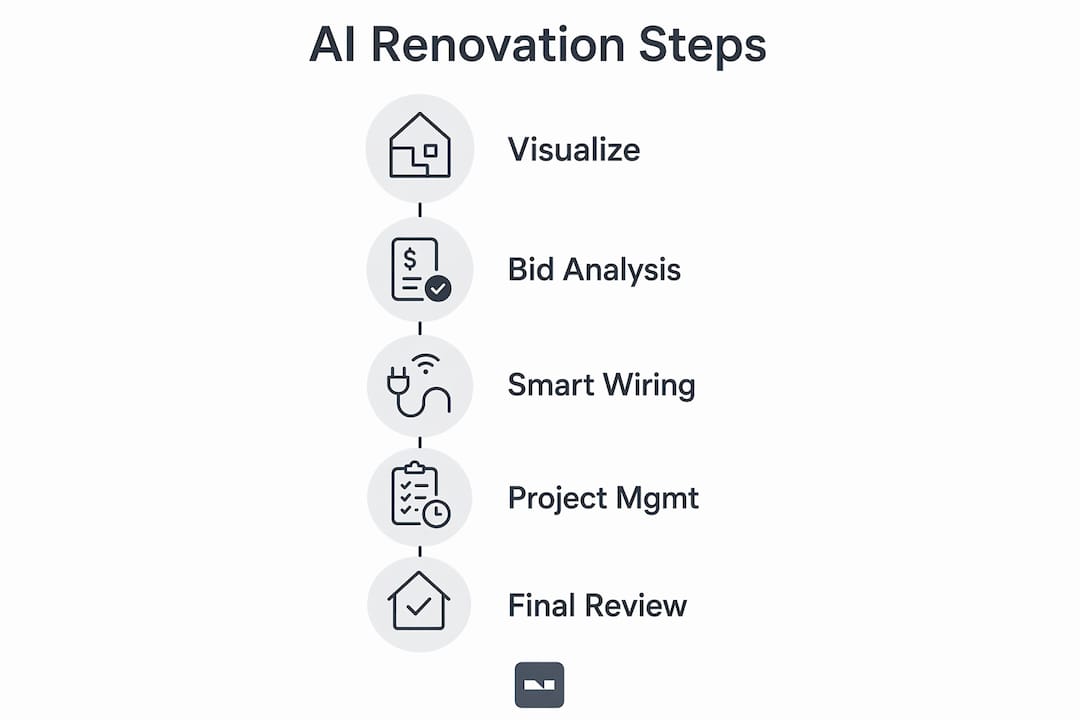
AI improves home renovations by making design, planning, and execution faster, more accurate, and less expensive. The industry term for this shift is “AI-assisted renovation planning,” and it covers everything from generating 3D room previews to analyzing contractor bids for hidden costs. Homeowners who use AI tools before breaking ground catch expensive mistakes early, test dozens of design options in minutes, and build smarter infrastructure the first time. This guide covers the four areas where AI delivers the clearest, most measurable results.
How AI improves home renovations through design visualization
AI-powered design visualization is the single biggest shift in how homeowners plan renovations. Instead of describing ideas to a contractor and hoping for the best, you can now upload a photo of your living room and receive a realistic preview of new flooring, paint colors, or a reconfigured layout within seconds. AI transforms sketches, photos, or text prompts into detailed floor plans and 3D previews, removing the guesswork that causes most mid-project changes.
The practical value goes beyond aesthetics. AI tools create digital twins and realistic floor plan adjustments that simulate wall removals, window placements, and furniture arrangements before a single nail is pulled. That means you walk into a contractor meeting with a clear visual brief, not a vague mood board. Contractors respond better to specific visuals, and that specificity reduces the back-and-forth that inflates labor costs.
For DIY homeowners, the benefit is even more direct. You can test ten different kitchen layouts in an afternoon without hiring an architect for an initial consultation. Platforms built around AI-powered design visualization let you describe changes in plain language and see professional-quality results immediately.
- Generate multiple color and material combinations from a single photo
- Preview furniture scale and placement before purchasing
- Simulate lighting changes across different times of day
- Test structural changes like open-plan conversions without committing
Pro Tip: Before your first contractor meeting, use an AI visualization tool to produce at least three distinct layout options. Showing a contractor what you do not want is just as valuable as showing what you do.
Can AI really save money on contractor bids?
The answer is yes, and the mechanism is specific. AI excels at structured document analysis like contractor bids, flagging vague or inflated line items before you sign anything. Most homeowners lack the experience to spot a suspicious bid, and contractors know it. AI levels that gap.
A practical example: a bid might include “$3,200 miscellaneous materials” with no breakdown, or an $800 per week dumpster rental that runs three weeks longer than the project requires. AI tools catch these patterns by comparing your bid against typical cost structures for similar projects. They also identify missing items, such as disposal fees or finish hardware, that will show up as change orders later.
The process for using AI to evaluate bids works best when you follow a structured approach:
- Paste the full bid text into an AI tool and ask it to list every line item.
- Request a scope check. Ask the AI to identify items that seem vague, missing, or priced outside normal ranges.
- Compare multiple bids side by side. Ask the AI to flag where two bids describe the same work differently, which reveals scope gaps.
- Generate clarifying questions. Use the AI to draft specific questions for each contractor before negotiating.
- Review the final contract. Run the signed scope of work through the AI one more time to confirm all verbal agreements made it into writing.
Pro Tip: Never compare bids on total price alone. Two bids at the same number can have completely different scopes. AI makes the scope comparison fast and specific, which is where the real savings live.
Why smart home infrastructure belongs in your renovation plan
Smart home renovations cost far less when planned during an open-wall renovation than when retrofitted later. Adding smart wiring during renovation adds 20–30% to electrical labor costs. Retrofitting the same infrastructure afterward can cost two to three times more, adding $8,000–$15,000 to the total project. AI tools help homeowners decide exactly what to rough in, so they avoid both under-building and over-specifying.
The most common mistake is over-specifying smart features instead of prioritizing the infrastructure that makes future upgrades possible. AI guides homeowners toward the right sequence: wire first, add devices later.
| Infrastructure priority | Why it matters |
|---|---|
| Cat6 wiring throughout | Supports wired networking, security cameras, and future AV needs |
| Conduit in walls | Lets you pull new cables without opening walls again |
| Dedicated circuits | Prevents overloads when adding EV chargers or home offices |
| Network segmentation | Keeps smart devices on a separate network from personal computers |
| Neutral wire at switches | Required for most smart switch installations |
Smart home devices using the Matter protocol work across Amazon, Google, Apple, and Samsung platforms without compatibility issues. Planning for Matter-compatible devices during the renovation means you are not locked into one ecosystem. Smart switches also outperform smart bulbs in reliability. Smart switches offer more consistent control than smart bulbs, which require the wall switch to stay permanently on and often confuse guests and family members.
- Plan wiring before drywall goes up, not after
- Install conduit even where you do not plan to run cable immediately
- Choose Matter-compatible devices to stay platform-neutral
- Prioritize switches over bulbs for lighting control
Smart home integration raises resale value by up to 5% when the systems are coherent and easy to use. That return depends entirely on getting the infrastructure right during the renovation, not as an afterthought.
How does AI support project management during a renovation?
AI project management tools change how homeowners track progress and communicate with contractors. AI predicts scheduling conflicts, tracks material availability, and generates professional communication templates that homeowners can use without sounding inexperienced. That last point matters more than most people expect. A well-worded written request carries more weight than a verbal conversation on a job site.

AI also helps with punch list creation at the end of a project. A punch list is the final checklist of incomplete or substandard work that a contractor must fix before final payment. AI tools generate thorough punch lists by cross-referencing the original scope of work against photos of the finished space. This catches details that homeowners miss because they are too close to the project.
AI assists DIYers by validating material choices, providing structural guidance, and breaking ambitious designs into manageable phases. A homeowner planning a full kitchen remodel can use AI to sequence the work correctly, so plumbing rough-in happens before tile, and electrical inspection clears before cabinet installation. Getting that sequence wrong causes delays that cost real money.
- Use AI to draft written change order requests before agreeing to extra costs verbally
- Generate a weekly progress summary to keep all parties aligned
- Create a material delivery schedule to reduce job site downtime
- Build a punch list from photos before the final contractor walkthrough
Pro Tip: Ask an AI tool to write your contractor emails for you. Describe the issue in plain language, and let the AI produce a professional, specific message. Contractors respond faster and more completely to written requests than to texts.
Key Takeaways
AI-assisted renovation planning saves the most money when applied before construction begins, not during it.
| Point | Details |
|---|---|
| Visualize before you build | AI generates 3D previews from photos or prompts, reducing mid-project design changes. |
| Audit every bid with AI | AI flags vague line items and scope gaps that lead to expensive change orders. |
| Wire during open walls | Smart wiring costs 20–30% more upfront but avoids retrofits costing $8,000–$15,000 more. |
| Prioritize infrastructure over devices | Conduit, Cat6, and neutral wires enable future upgrades without reopening walls. |
| Use AI for project communication | AI-drafted emails and punch lists improve contractor accountability and reduce disputes. |
What I’ve learned from watching AI enter the renovation world
AI accelerates the parts of renovation planning that homeowners historically got wrong: the early decisions. Most costly mistakes happen before a single wall opens. A homeowner commits to a layout they have never seen at full scale, accepts a bid with a vague scope, or skips smart wiring because it was not in the original budget. AI addresses all three of those failure points directly.
What surprises me is how few homeowners use AI for bid analysis. The visualization tools get attention because the output is visual and satisfying. But the bid evaluation use case is where AI delivers the most concrete financial protection. A $3,200 line item labeled “miscellaneous materials” on a $40,000 kitchen remodel is a red flag that most homeowners walk past. AI does not.
The infrastructure planning argument is the one I make most strongly. Walls are open once. The cost difference between wiring correctly during a renovation and retrofitting later is not marginal. It is the difference between a $1,500 upgrade and a $15,000 problem. AI helps homeowners understand that sequence before they make the irreversible decision to close the walls.
AI does not replace a skilled contractor, a licensed electrician, or a good architect. It gives you a better brief, a cleaner contract, and a smarter infrastructure plan before those professionals arrive. That is the right way to use it. Treat AI as a preparation tool, and the professionals you hire will do better work because of it.
— Hello
Vibemyflat makes renovation visualization fast and specific
Seeing your renovation before it happens is the fastest way to avoid expensive regrets. Vibemyflat lets you upload a photo of any room and describe the changes you want in plain language. The platform returns a professional-quality preview in under 30 seconds, with no design software experience required.

Homeowners use Vibemyflat to test paint colors, reconfigure layouts, and preview furniture arrangements before committing to any purchase or contractor agreement. The platform works on iOS, Android, and desktop, so you can visualize interior changes at any stage of your planning process. For anyone preparing to meet with a contractor, having a clear visual reference from Vibemyflat turns a vague conversation into a specific, productive one. Visit Vibemyflat to see what your renovation could look like before the work begins.
FAQ
What is AI-assisted renovation planning?
AI-assisted renovation planning uses artificial intelligence tools to generate design previews, analyze contractor bids, and support project scheduling. It helps homeowners make better decisions before construction begins.
How does AI help evaluate contractor bids?
AI analyzes bid documents and flags vague line items, missing scope elements, and inflated costs. It also compares multiple bids side by side to reveal scope differences that affect total project cost.
When should smart home wiring be planned in a renovation?
Smart home wiring should be planned before drywall closes, during the open-wall phase. Retrofitting smart infrastructure afterward costs two to three times more than roughing it in during the original renovation.
Does AI replace architects or contractors?
AI does not replace architects or contractors. It helps homeowners arrive at professional meetings with clearer briefs, better questions, and more specific visual references, which improves the quality of professional work.
Can AI tools help DIY homeowners with renovations?
AI validates material choices, sequences project phases correctly, and breaks complex designs into manageable steps. It also provides AI tools for home improvement that support non-professionals without requiring technical expertise.