Must-Have Decor Items for a Stylish, Functional Home
Must-Have Decor Items for a Stylish, Functional Home
TL;DR:
- Must-have home decor items blend style and practicality to enhance rooms without full renovations. Experts recommend accent chairs, area rugs, storage baskets, and layered lighting as versatile, functional pieces. Building a collection with the High-Low shopping strategy and applying the 60-30-10 color rule ensures balanced, budget-conscious interior design.
Must-have decor items are essential home accents that balance visual appeal with practical function, and the right selection transforms any room without a full renovation. Interior designers consistently point to a core set of decorative pieces to own, from area rugs to accent chairs, that deliver both style and daily utility. Whether you rent a studio apartment or own a four-bedroom house, these top decor essentials give you the most return on every dollar and square foot. This guide covers what to buy, how to choose decor items based on proven design principles, and how to build a collection that works for your actual life.
1. What are the must-have decor items that combine style and practicality?
The strongest essential home accents earn their place by doing two jobs at once. Each piece listed here pulls visual weight and solves a real household problem.
Accent chairs
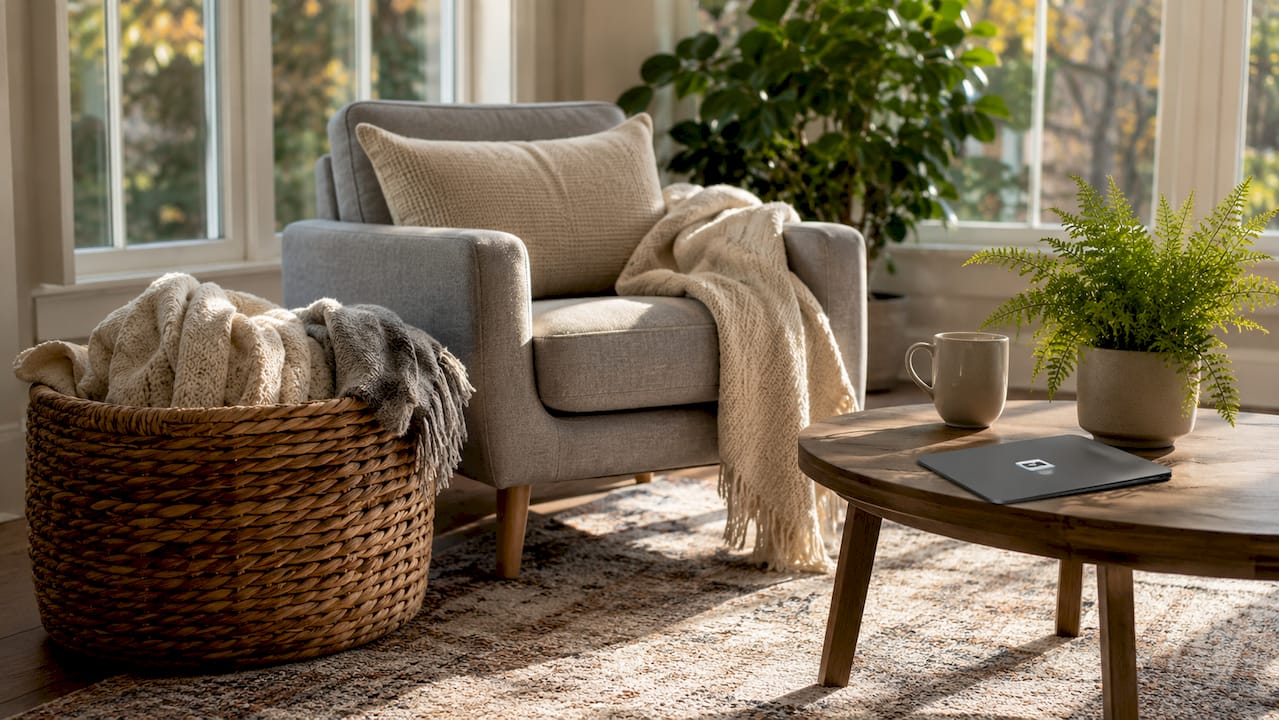
Accent chairs are the most versatile decor pieces designers recommend. You can rotate them between rooms to shift the energy of a space without touching a single wall. A linen armchair works in a bedroom corner one season and beside a living room console the next.
Large area rugs
Area rugs define zones within a room, ground furniture groupings, protect flooring, and reduce noise. A well-chosen rug makes a small room feel larger and a large room feel more intimate. They are also one of the easiest pieces to swap seasonally without spending much.
Decorative storage baskets
Decorative storage baskets combine visual texture with real organization. Woven seagrass or rattan baskets hold blankets, magazines, or toys while adding warmth to shelves and floors. They are one of the few favorite room accessories that actually reduce clutter rather than add to it.
Wall art at the right scale
Large wall artwork should span at least 60–70% of the available wall width to maintain proper visual balance. Art that is too small floats awkwardly and makes a room feel unfinished. Choosing the right size is more important than choosing the right subject. For guidance on building a gallery wall, styling art walls with calm, sophisticated arrangements is a skill worth developing early.
Layered lighting
Lighting is the cheapest facelift for any interior. Swapping standard bulbs for 3000K warm LED bulbs improves room mood and makes colors read more accurately. Layered lighting means combining overhead fixtures, floor lamps, and table lamps so you can adjust the atmosphere for any time of day. More detail on building that system is available in this guide to layered home lighting.
Pro Tip: Buy one statement lamp before you buy any decorative object. Lighting changes how every other piece in the room looks, so get it right first.
2. How to choose decor items based on scale, color, and function
Choosing decor items well requires three filters: scale, color, and function. Apply all three before you buy anything.
-
Apply the 60-30-10 color rule. The 60-30-10 rule balances dominant, secondary, and accent elements. Use your dominant color on 60% of the room (walls, large furniture), a secondary color on 30% (curtains, rugs, upholstery), and a bold accent on the remaining 10% (throw pillows, vases, art). This prevents any single color from overwhelming the space.
-
Limit your palette to 3–5 colors. A home color palette limited to 3–5 coordinated colors creates visual flow and makes it easy to move pieces between rooms. Neutral base tones on large items let you update the look seasonally with small, affordable accents.
-
Match decor scale to room size. A large sectional sofa needs a large rug. A narrow entryway needs a slim console, not a wide credenza. Decor that fights the room’s proportions always looks wrong, regardless of quality.
-
Prioritize multifunctional pieces. Every item should justify its footprint. An ottoman with internal storage, a mirror that reflects light into a dark corner, or a bench at the foot of a bed that doubles as seating all earn their place. For more ideas, creative space-saving ideas for small homes covers this in depth.
-
Protect negative space. Leaving 30–40% of surface area visible improves room appeal and prevents overcrowding. Negative space is not empty space. It is the breathing room that makes your statement pieces stand out.
Pro Tip: Before buying a new piece, photograph your room and mark where each existing item sits. You will immediately see where you have room and where you are already crowded.
3. Smart, budget-conscious strategies for building your decor collection
The High-Low shopping strategy is the most practical framework for building a decor collection without overspending.
- Invest in anchor pieces. The High-Low strategy recommends spending on items that get daily use: sofas, rugs, bed frames, and quality lighting. These pieces take wear and need to last. Cutting corners here costs more in the long run.
- Save on trendy accents. Throw pillows, vases, candles, and seasonal wreaths are the pieces to buy affordably. Trends shift every 12–18 months, and you want to swap these out without guilt.
- Rotate seasonally. Swapping throw pillow covers, changing a rug, or switching out a vase gives a room a fresh look for under $50. You do not need a full redesign to feel like you have a new space.
- Choose quality materials for high-touch items. Linen, solid wood, and ceramic hold up better than synthetic alternatives in pieces you touch every day. A solid wood side table will outlast three particleboard versions.
- Repurpose before you replace. A bedroom dresser can function as a media console in a living room. A kitchen stool can become a plant stand. Moving pieces between rooms costs nothing and often produces the best results.
For a broader look at affordable updates that make a real difference, practical interior enhancement tips are worth reading before your next shopping trip.
4. Which decor items work best in small or flexible living spaces?
Small spaces reward multifunctional decor more than any other environment. The pieces below do more than one job without taking up extra room.
| Decor Item | Primary Function | Secondary Function |
|---|---|---|
| Accent chair | Seating | Style anchor, movable between rooms |
| 3-drawer dresser | Clothing storage | Nightstand, console, or side table |
| Area rug | Zone definition | Noise reduction, floor protection |
| Woven storage basket | Organization | Textural decor element |
| Floor lamp | Task or ambient lighting | Vertical visual interest |
Multifunctional decor items like accent chairs and small-scale dressers are the pieces designers call “worth buying once and using everywhere.” A 3-drawer dresser placed in a hallway becomes a console. Moved to a bedroom, it becomes a nightstand with storage. That kind of flexibility is exactly what renters and homeowners with limited square footage need.
Accent chairs offer design flexibility that almost no other piece can match. They are light enough to move, strong enough to anchor a corner, and stylish enough to work in any room. Buy one good one before you buy three mediocre ones.
Area rugs deserve special attention in small spaces. A rug that is too small makes a room feel fragmented. The right size pulls furniture together and creates the illusion of a defined, intentional zone. For renters, rugs are one of the few ways to personalize a space without touching the walls.
Key takeaways
The most effective approach to building a home decor collection is to prioritize multifunctional anchor pieces first, apply the 60-30-10 color rule for balance, and use the High-Low shopping strategy to protect your budget.
| Point | Details |
|---|---|
| Start with anchor pieces | Invest in rugs, lighting, and accent chairs before buying decorative accents. |
| Use the 60-30-10 rule | Distribute color across dominant, secondary, and accent proportions to avoid visual overload. |
| Protect negative space | Leave 30–40% of surfaces clear so statement pieces have room to stand out. |
| Apply the High-Low strategy | Spend on durable anchor items and save on trendy, swappable accents. |
| Choose multifunctional pieces | Select items that serve two purposes, especially in small or rented spaces. |
Why I think most people buy decor in the wrong order
Most homeowners and renters buy the fun stuff first: a decorative tray, a candle, a throw pillow. Then they wonder why the room still feels off. The real problem is almost always lighting or scale, not the absence of more objects.
The single biggest shift I have seen in how people approach their spaces is when they stop buying things and start editing. Accent chairs and layered lighting are the two pieces that consistently change how a room feels, not just how it looks. A warm lamp in a dark corner does more for a room’s mood than a shelf full of carefully chosen objects.
The balance between investing in anchor pieces and buying decorative accents is not complicated. Spend where you sit, sleep, and walk. Save where you look. And always leave more empty space than feels comfortable at first. The rooms that photograph well and feel good to live in are never the fullest ones.
Decor is not static. Your lifestyle changes, your taste evolves, and the best collections are the ones built to move with you rather than lock you into one look.
— Hello
Visualize your decor choices before you buy with Vibemyflat
Choosing the right decor items is easier when you can see them in your actual space before spending a dollar.
Vibemyflat is an AI-powered photo editing app that lets you describe changes to your room in plain language and see the result in under 30 seconds. Want to see how a warm-toned rug looks against your current floors? Curious whether a bold accent chair works in your living room corner? Vibemyflat renders it instantly, on your phone or desktop, without any design software experience required. Try Vibemyflat’s AI interior editor and make every decor decision with confidence.
FAQ
What are the most important decor items to buy first?
Start with an area rug, a quality light source, and one accent chair. These three pieces establish scale, mood, and flexibility before you add anything else.
How do I choose the right size wall art?
Wall art should span at least 60–70% of the available wall width. Art that is too small disrupts visual balance and makes a room feel unfinished.
What is the 60-30-10 rule in home decor?
The 60-30-10 rule divides a room’s color into 60% dominant, 30% secondary, and 10% accent. This proportion prevents any single color from taking over the space.
How can renters personalize a space without permanent changes?
Area rugs, accent chairs, floor lamps, and decorative baskets all add strong personal style without touching walls or floors. These pieces move with you when you leave.
What is the High-Low shopping strategy for home decor?
The High-Low strategy means spending more on durable anchor pieces like sofas and rugs, and less on trendy accents like pillows and vases that you will swap out regularly.