Professional photo editing for real estate: sell faster
Professional photo editing for real estate: sell faster
TL;DR:
- Professional photo editing enhances property images to attract buyers and sell faster.
- AI tools speed up editing processes but require final human review for authenticity.
- Strategic, intent-driven editing creates emotional appeal and boosts real estate sales.
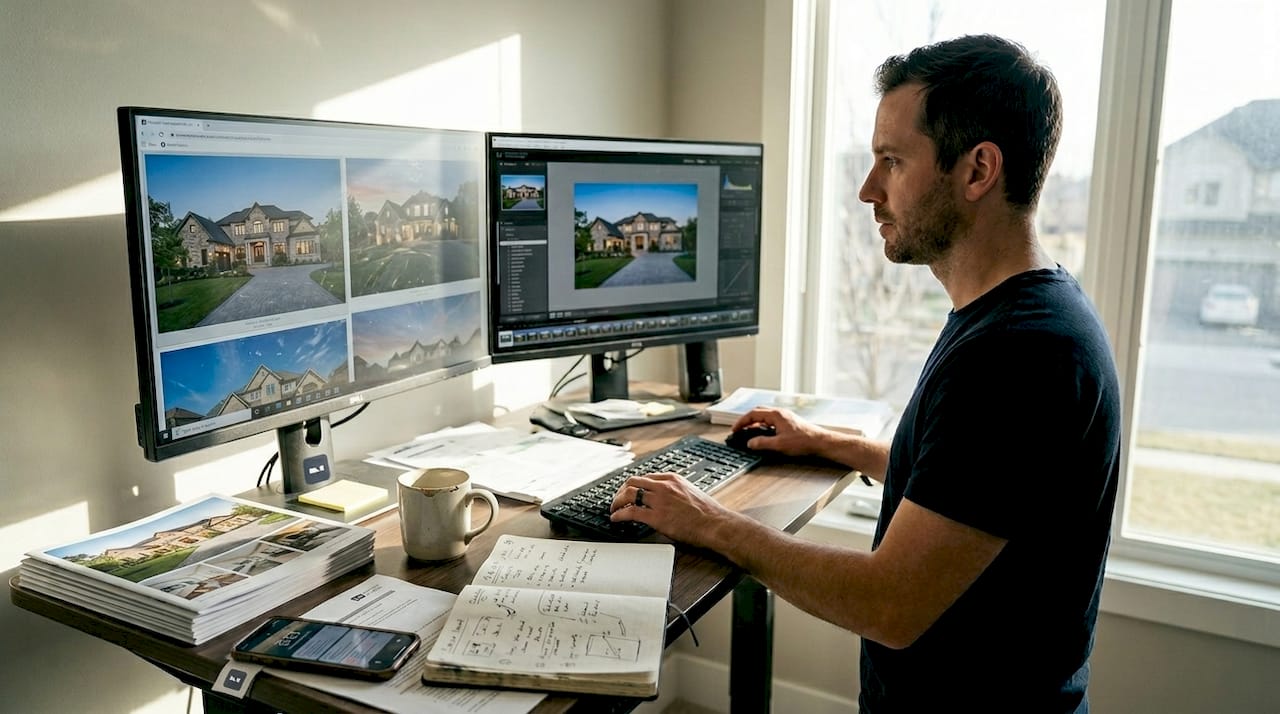
Most real estate agents assume a decent smartphone and good natural light are enough to photograph a listing. They are not. Buyers scroll through dozens of listings in minutes, and low-quality photos get skipped without a second glance. Property editing benefits are well documented, and the gap between a mediocre listing photo and a professionally edited one can mean thousands of dollars in final sale price. This article walks through what professional editing actually involves, the key techniques that matter most, how AI is changing the game, and why the visual quality of your listing photos is one of the highest-leverage decisions you can make.
Table of Contents
- What is professional photo editing in real estate?
- Key techniques used in real estate photo editing
- AI-driven editing: Speed and quality benefits
- How professional editing impacts sales and design
- Our perspective: What most people miss about real estate photo editing
- Elevate your real estate images with seamless editing solutions
- Frequently asked questions
Key Takeaways
| Point | Details |
|---|---|
| Professional editing defined | Enhances property images with advanced techniques beyond smartphone filters. |
| AI boosts efficiency | AI-driven solutions dramatically speed up photo editing for real estate listings. |
| Impact on sales | Well-edited photos increase interest and can lead to faster, higher-priced sales. |
| Virtual staging value | Shows buyers property potential, making listings stand out in crowded markets. |
| Human touch matters | Combining AI technology with professional judgment achieves the best photo results. |
What is professional photo editing in real estate?
Professional photo editing in real estate is the process of enhancing property images so they accurately and attractively represent a space. It goes far beyond slapping a filter on a photo. Skilled editors or AI platforms adjust lighting, correct colors, remove distracting objects, and even digitally stage empty rooms with furniture.
Here is what the process typically covers:
- Lighting correction: Balancing interior brightness with exterior window light so neither blows out or goes dark
- Color balancing: Ensuring walls, floors, and surfaces appear true to life rather than yellow or washed out
- Object removal: Clearing personal items, cords, trash cans, or anything that breaks the visual flow
- Virtual staging: Digitally placing furniture and decor into empty or sparsely furnished rooms
- Perspective correction: Straightening vertical and horizontal lines so rooms look properly proportioned
The difference between this and basic smartphone editing is significant. Smartphone apps work with presets. Professional editing, whether done by a human or an AI tool, applies context-specific adjustments that preserve the natural feel of a space while making it look its absolute best.
Why does this matter commercially? NAR statistics consistently show that listings with high-quality photos receive more online views and sell faster than those with poor visuals. As the seamless editing guide points out, professional editing can elevate property visuals and speed up sales in measurable ways.
Beyond speed, edited photos shape perception. A well-lit, clean, and properly staged photo makes a room feel larger, cleaner, and more valuable. Buyers form emotional impressions within seconds of seeing a photo, and those impressions drive whether they schedule a showing or move on.
“Buyers form their first impression of a property online, and that impression is almost entirely visual. The quality of your listing photos is not optional — it is your first sales pitch.”
For agents managing multiple listings, consistent photo quality also builds brand credibility. Buyers start to associate your name with well-presented properties, which compounds over time.
Key techniques used in real estate photo editing
Now that you understand what professional editing is, here is a closer look at the specific techniques that separate average listing photos from standout ones.
| Technique | Amateur approach | Professional approach |
|---|---|---|
| Lighting | Auto exposure, often uneven | Manual correction, balanced indoor/outdoor |
| Color | Default white balance | Calibrated to true-to-life tones |
| Object removal | Physically moving items | Digital removal, clean background fills |
| Staging | Empty rooms or personal furniture | Virtual staging with styled pieces |
| Perspective | Slight distortion from wide-angle lens | Corrected verticals and horizontals |
Here is a practical step-by-step approach to applying these techniques, whether you work with an editor or use an AI platform:
- Start with lighting. Lighting adjustments are the single most impactful edit. Correct exposure first before touching anything else.
- Fix white balance. Rooms often photograph with a yellow or blue cast. Adjust until surfaces look neutral and natural.
- Remove clutter digitally. Use object removal tools to eliminate anything that pulls attention away from the room itself.
- Apply virtual staging if needed. Empty rooms are hard for buyers to connect with emotionally. Staged rooms sell the lifestyle, not just the space.
- Correct perspective. Wide-angle lenses distort lines. Straighten walls and floors so the room looks architecturally accurate.
- Export at full resolution. Never compress final images for listing platforms beyond what is required.
For interior photo editing tips that go deeper on each of these steps, there are resources specifically built for real estate contexts. Zillow’s real estate photo tips also offer useful guidance on shooting conditions that make editing easier.
Pro Tip: Always request the original, uncompressed source files from your photographer before editing begins. Compressed files lose detail that cannot be recovered, and starting with high-quality raw images gives editors far more flexibility to work with.
AI-driven editing: Speed and quality benefits
Traditional photo editing by a skilled professional takes time. A single room might require 20 to 40 minutes of careful work. For an agent with a 15-property portfolio, that adds up fast. This is exactly where AI-driven editing changes the math.
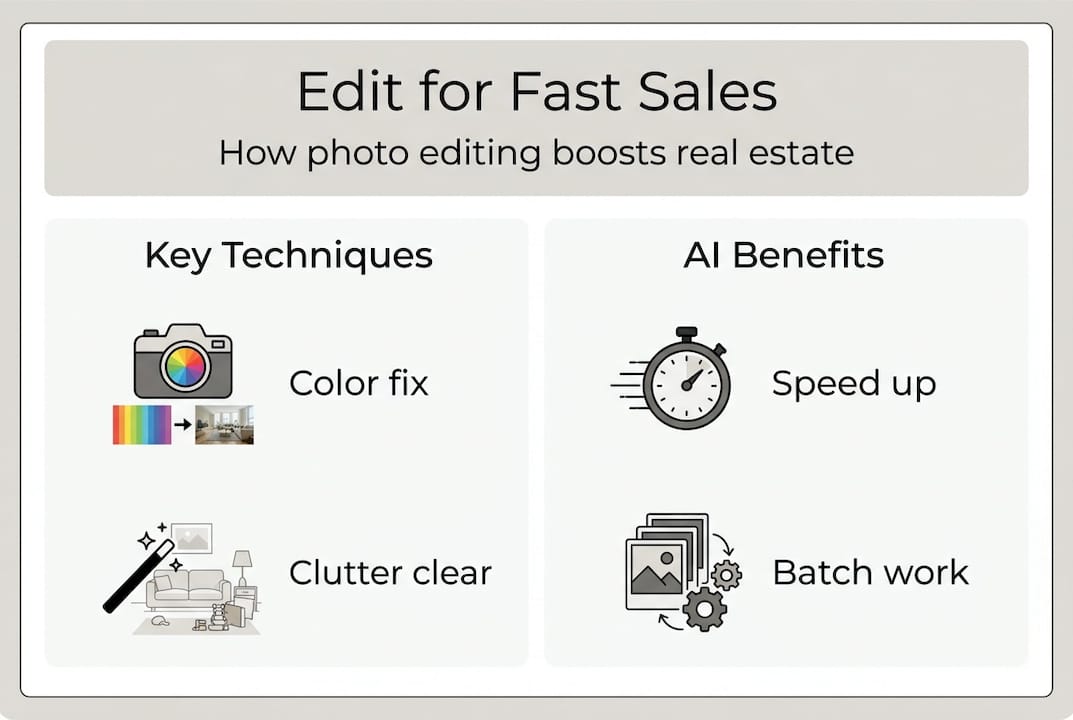
AI tools automate the most repetitive tasks: sky replacement, brightness normalization, clutter removal, and color correction. What used to take hours can now be done in under a minute per image. AI for real estate editing provides tailored solutions that match the speed demands of active real estate professionals.
| Factor | Traditional editing | AI-driven editing |
|---|---|---|
| Time per image | 20 to 40 minutes | Under 60 seconds |
| Cost per image | $10 to $50 | $1 to $5 |
| Consistency | Varies by editor | High, uniform output |
| Batch processing | Slow, sequential | Fast, simultaneous |
| Customization | High | Moderate to high |
The fast photo editing advantages for agents with large portfolios are obvious. Batch processing means you can upload 30 photos and receive edited versions in the time it would take a human editor to finish three. AI solutions can cut editing time by over 70%, which is a meaningful operational improvement for busy agents.
The New York Times has noted that AI tools in real estate are reshaping how listings are prepared and presented, with adoption growing rapidly among both independent agents and large brokerages.
That said, AI is not a set-it-and-forget-it solution. Automated tools occasionally over-brighten a room, produce unnatural sky replacements, or miss subtle color issues that a trained eye would catch immediately.
Pro Tip: Use AI for speed and volume, but always do a final review of each image before publishing. A quick human check catches the 5% of edits that look slightly off and protects your listing’s credibility.
How professional editing impacts sales and design
The business case for professional photo editing is not theoretical. It shows up in real numbers. Listings with stunning interior photos consistently outperform those with unedited or poorly edited images across multiple performance metrics.
Here are the top benefits broken down by who you are:
- For agents: Higher click-through rates on listing platforms, more showing requests, faster time on market, and stronger brand perception
- For sellers: Better first impressions that justify asking prices, reduced days on market, and stronger negotiating positions
- For buyers and renters: Clearer sense of space, layout, and potential, which reduces uncertainty and builds confidence to act
Design visualization is another underrated benefit. When a buyer sees a virtually staged room with a specific furniture layout and color palette, they stop seeing an empty box and start seeing their life in that space. That emotional shift is what drives offers.

Platforms like user-friendly editing tools make this accessible even for homeowners who are not professional photographers or designers. You do not need to hire a specialist for every edit when AI can handle the bulk of the work.
Redfin’s research on selling with photos reinforces this: listings with professional-quality images sell faster and at higher prices than comparable listings with amateur photos.
“Homes with high-quality listing photos sell 32% faster than those without, according to industry research. The camera does not just document the property — it markets it.”
For design professionals and interior decorators working with clients, edited photos also serve as powerful before-and-after communication tools. Showing a client a digitally redesigned version of their own space is far more persuasive than a mood board.
Our perspective: What most people miss about real estate photo editing
Here is the uncomfortable truth most articles skip: the biggest mistake in real estate photo editing is not using bad tools. It is using good tools without a clear visual strategy.
We see agents invest in AI platforms and professional editors, then produce photos that are technically clean but emotionally flat. A perfectly lit, color-corrected photo of a beige living room with no personality does not sell a home. It just documents it.
The real differentiator is editing with intent. Every choice, from which objects to remove to how warm the lighting feels, should serve the story you are telling about the property. Who is the buyer? What lifestyle does this home support? Those questions should guide every edit.
AI is genuinely powerful here, but only when paired with that kind of strategic thinking. Over-editing is also a real risk. Buyers who arrive at a showing and find a space that looks nothing like the photos feel deceived, and that kills deals. Authenticity and appeal are not opposites. The goal is to show the property at its honest best, not to fabricate something it is not.
For those exploring DIY editing vs. pro approaches, the answer often depends less on skill and more on having a clear visual goal before you start editing.
Pro Tip: Refresh your listing photo style at least once a year. Design trends shift, and photos that looked modern two years ago can now signal an outdated listing to sharp buyers.
Elevate your real estate images with seamless editing solutions
If you are ready to move beyond basic filters and see what AI-powered editing can actually do for your listings, VibeMyFlat editing tools offer a fast, intuitive platform built specifically for property and interior photos. You describe the change you want in plain language, and the AI handles the rest in under 30 seconds.

Whether you are an agent managing a full portfolio, a homeowner preparing to list, or a designer visualizing a renovation, VibeMyFlat adapts to your workflow. No complex software, no steep learning curve. If you are also evaluating other platforms, the comparison of alternatives to aiHomeEditor is a useful starting point for finding the right fit. Professional-quality results are more accessible than ever.
Frequently asked questions
How does professional photo editing help sell homes faster?
Professionally edited photos capture attention online and showcase properties in their best light, drawing in more buyers and leading to quicker sales. Edited images consistently improve listing outcomes and attract more qualified inquiries.
Are AI editing tools reliable for real estate photos?
AI-powered editing boosts speed and consistency across large batches of photos, but a professional review of final images is always recommended to catch subtle errors before publishing.
Can homeowners use professional editing solutions themselves?
Absolutely. Many platforms are designed with user-friendly tools that require no prior editing experience, making professional-quality results accessible to homeowners preparing their own listings.
What is virtual staging and why is it important?
Virtual staging is digitally adding furniture or decor to empty rooms to help buyers visualize the space’s potential. It is one of the most effective professional editing services available for increasing buyer engagement with a listing.