What Is Digital Staging? A Real Estate Guide for 2026
What Is Digital Staging? A Real Estate Guide for 2026

TL;DR:
- Digital staging digitally enhances property photos to help buyers visualize spaces without physical furniture costs. AI-powered tools make virtual staging fast, affordable, and effective for marketing existing listings. Proper disclosure and matching style are essential for ethical and successful virtual staging.
Digital staging is the process of digitally furnishing and enhancing real property photos to help buyers visualize a space’s potential without physical furniture or traditional staging costs. The industry term you’ll see most often is virtual staging, and the two phrases describe the same core practice. Agents, homeowners, and interior designers use this technique to turn empty or dated rooms into polished, market-ready listings. With AI now processing edits in under 30 seconds, the gap between a raw photo and a compelling listing image has never been smaller.
What is digital staging and how does it work?
Digital staging is defined as the use of photo editing, 3D furniture overlays, and AI-powered tools to add realistic decor and furnishings to existing property photographs. Virtual staging uses photo editing and 3D rendering to place realistic decorative elements directly into listing images. The result looks like a professionally staged room without a single piece of furniture being moved.
The process starts with a high-quality photograph of the empty or occupied space. A designer or AI platform then selects furniture, rugs, artwork, and lighting that fit the room’s dimensions and architectural style. The final image blends the real photo with the virtual elements so naturally that most buyers cannot tell the difference.

This technique plays a direct role in real estate marketing because online listings are where most buyers form their first impression. A vacant room with bare walls reads as cold and hard to picture. A digitally staged version of the same room communicates scale, warmth, and lifestyle immediately.
How does digital staging differ from 3D rendering?
Digital staging and 3D rendering are related but solve different problems. Digital staging overlays enhancements on existing photography, while 3D rendering builds complete visualizations from digital models for spaces that have no existing photography yet.
The practical difference matters when you choose a method. Digital staging works best for resale listings, occupied homes, and vacant properties that have already been built. 3D rendering is the right call for pre-construction projects, major gut renovations, or any space where no real photo exists. 3D rendering is often reserved for pre-construction or extensively remodeled projects that lack existing photography.
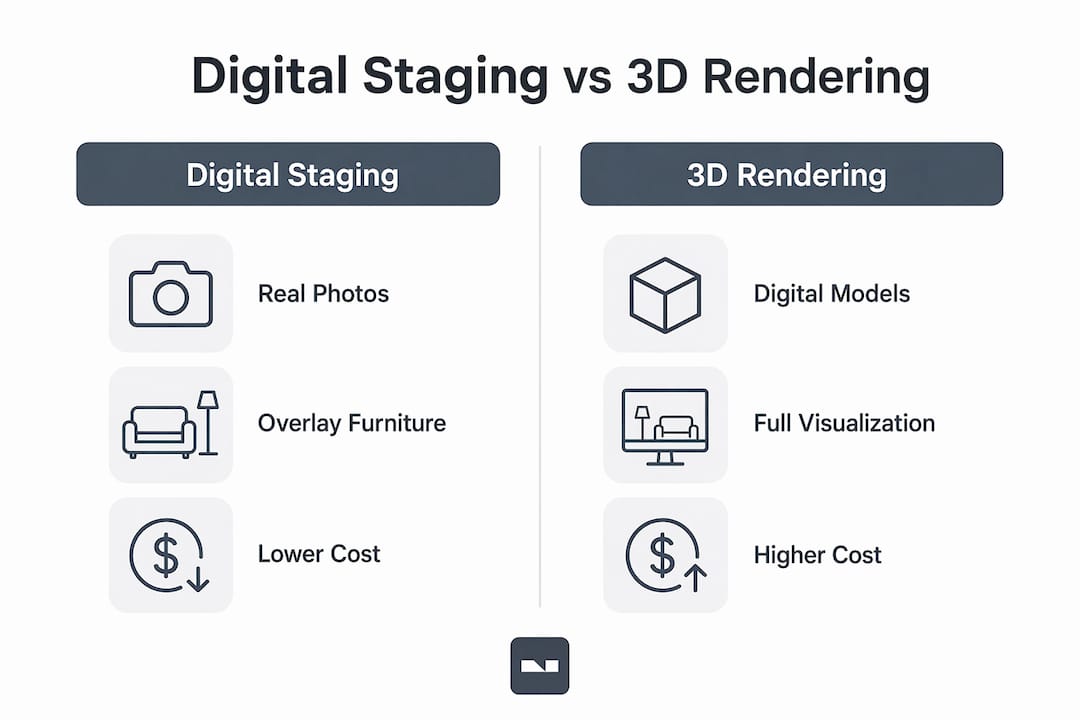
| Criteria | Digital staging | 3D rendering |
|---|---|---|
| Starting point | Real photograph | Digital architectural model |
| Best use case | Resale and vacant listings | Pre-construction and major renovations |
| Turnaround time | Hours to one day | Days to weeks |
| Typical cost | Lower, often per image | Higher, often per scene |
| Realism constraint | Bound by the real photo | Fully customizable |
Cost is the sharpest dividing line. Virtual staging costs can drop as low as $0.17 per image with AI-powered tools. Full 3D rendering of a single room typically runs far higher because it requires modeling every surface from scratch.
Pro Tip: If you have a real photo of the space, always start with digital staging. Reserve 3D rendering for rooms that do not yet exist in physical form.
What techniques and technology power virtual staging services?
The toolkit behind virtual staging services has expanded well beyond basic photo retouching. These enhancements help portray a property’s full potential realistically, and the range of techniques now available covers nearly every visual challenge a listing faces.
The core techniques include:
- Furniture and decor placement. AI selects and scales sofas, beds, tables, and accent pieces to match the room’s actual dimensions. Perspective and shadow are adjusted to match the original photo’s lighting.
- Item removal. Existing clutter, dated furniture, or personal belongings are erased from the photo, leaving a clean base for the staged version.
- Day-to-dusk conversion. Exterior photos taken in flat midday light are transformed into warm golden-hour or twilight shots that photograph dramatically better.
- Digital landscaping. Dead grass, bare flowerbeds, or plain concrete are replaced with lush greenery and seasonal plantings to boost curb appeal.
- Virtual renovation. Wall colors, flooring materials, cabinet finishes, and countertops are swapped digitally so buyers can see a remodeled version of the space before any work begins.
AI platforms have made these techniques accessible to agents and homeowners who have no design background. Platforms like Vibemyflat accept plain-language descriptions. You type something like “change the walls to warm white and add a mid-century modern sofa,” and the AI applies the edit in seconds. This natural language approach removes the technical barrier that once made digital interior design the exclusive domain of professional retouchers.
Pro Tip: For the most realistic result, shoot your base photos with a wide-angle lens at eye level. AI staging tools perform best when the room’s geometry is clearly visible in the original image.
The photo editing for home staging workflow has become a standard step in listing preparation, not an optional upgrade. Agents who skip it are competing against listings that have already cleared this bar.
Why is digital staging beneficial for sellers, agents, and designers?
The advantages of digital staging fall into three categories: cost, speed, and marketing reach. Each one addresses a real pain point in traditional staging.
Cost savings are significant. Virtual staging can cut physical staging costs by up to 97% and help homes sell faster by improving online listing appeal. Physical staging requires renting furniture, hiring movers, and paying a staging company for weeks of placement. Digital staging replaces all of that with a per-image fee.
Speed changes the listing timeline. Digital staging workflows shorten time to market and simplify logistics compared to physical staging, which can take days or weeks. A digitally staged set of listing photos can be ready within 24 hours of the original shoot.
Sales performance improves measurably. Listings using AI-powered virtual staging see up to 36% faster time on market and 22% higher selling prices. That is a direct return on a relatively small per-image investment.
The numbered list of advantages for different users breaks down clearly:
- Sellers avoid the logistical burden of clearing out furniture and coordinating staging crews.
- Agents can list a property faster and present multiple design styles to appeal to different buyer demographics.
- Interior designers use digital staging to pitch renovation concepts to clients before any physical work begins.
- Property managers stage vacant rentals to attract tenants without furnishing the unit.
- Distant sellers can stage a property they cannot visit in person, which is especially useful for estate sales and relocations.
The role of digital staging in real estate has shifted from a nice-to-have to a baseline expectation in most competitive markets. Buyers scrolling through listings online make split-second decisions based on the first photo. A staged image holds attention longer and drives more showing requests.
How to use digital staging effectively for property visualization
Effective digital staging requires more than uploading a photo and clicking a button. The choices you make about style, scale, and disclosure determine whether the result helps or hurts your listing.
Follow these best practices:
- Match the staging style to the property. A minimalist Scandinavian interior suits a modern condo. A warm, traditional palette works better in a colonial-style home. Mismatched styles confuse buyers about the property’s identity.
- Keep scale accurate. Oversized furniture makes rooms look smaller. Undersized pieces make them look cavernous. AI platforms that understand design principles handle this automatically, but always review the final image against the room’s actual square footage.
- Disclose digital staging clearly. Transparency and accurate scale are essential to maintain ethical virtual staging that helps rather than misleads buyers. Most listing platforms require a disclosure label on digitally staged images. Add it without hesitation.
- Avoid over-staging. Too many accessories, too many colors, and too much furniture overwhelm the eye. The goal is to show the room’s potential, not to decorate it for a magazine shoot.
- Use digital staging as one part of a broader marketing plan. Pair staged images with accurate floor plans, video walkthroughs, and honest written descriptions. Staging draws buyers in; the other materials close the deal.
Pro Tip: Always include at least one unstaged photo alongside the staged version in your listing. Buyers appreciate seeing both, and it reinforces that the staging is a visualization tool, not a misrepresentation.
For properties with specific layout challenges, furniture placement in listings is worth studying before you brief a staging platform. Understanding which arrangements photograph well saves revision time. For inspiration on bespoke furniture styles that translate well into digital staging concepts, natural living ideas from design-focused manufacturers offer a useful reference point for material and color choices.
Digital staging has changed how I think about property marketing
The first time I saw a digitally staged listing outperform a physically staged one in the same building, I stopped treating virtual staging as a budget shortcut. The digitally staged unit sold in less than two weeks. The physically staged one sat for six. The difference was not the furniture. It was that the digital version had been styled specifically for how buyers browse online, with bright, wide shots and a consistent color palette that read well on a phone screen.
What most people miss is that digital staging is not just a cost play. It is a communication tool. A well-staged image tells a buyer exactly who this home is for. A bare room tells them nothing. The best agents I have seen use digital staging to test two or three different design directions before committing to one for the final listing. That kind of flexibility does not exist in physical staging.
The ethical question comes up often, and I think the answer is straightforward. Disclose it, keep the scale accurate, and do not hide structural problems behind a beautiful sofa. Buyers who feel misled do not make offers. Buyers who feel inspired do. The technology works best when it is used to show a property’s genuine potential, not to manufacture a fiction.
AI is accelerating this field faster than most agents realize. The gap between a basic AI staging tool and a professional retoucher’s output has narrowed to the point where the distinction barely matters for standard listings. The next shift will be interactive staging, where buyers can swap furniture styles themselves during a virtual tour. That is not far off, and agents who already understand digital staging will adapt to it without friction.
— Hello
Vibemyflat makes digital staging fast and accessible
Real estate agents and homeowners who want professional staging results without a design background now have a direct path forward.

Vibemyflat is a web-based platform and mobile app that processes interior photo edits in under 30 seconds using AI. You describe the change you want in plain language, and the platform applies it instantly. Wall colors, furniture styles, lighting, and full room redesigns are all handled through the same natural language interface. Vibemyflat works on iOS and Android, so you can stage a listing from anywhere. Start editing your property photos on Vibemyflat and see the difference a staged image makes before your next listing goes live.
Key takeaways
Digital staging is the fastest and most cost-effective way to present a property’s potential to online buyers, with AI tools now making professional results accessible to anyone.
| Point | Details |
|---|---|
| Core definition | Digital staging adds virtual furniture and decor to real property photos using photo editing and AI. |
| Cost advantage | Virtual staging can cut physical staging costs by up to 97%, with AI tools pricing as low as $0.17 per image. |
| Sales impact | AI-staged listings sell up to 36% faster and achieve up to 22% higher prices than unstaged listings. |
| Disclosure is required | Always label digitally staged images clearly to maintain buyer trust and comply with listing regulations. |
| Best use case | Digital staging suits existing properties; 3D rendering is the right choice for pre-construction or unbuilt spaces. |
FAQ
What is digital staging in real estate?
Digital staging is the practice of adding virtual furniture, decor, and lighting to real property photographs using photo editing and AI tools. The goal is to help buyers visualize a space’s potential without the cost or logistics of physical staging.
How much does virtual staging cost?
AI-powered virtual staging can cost as little as $0.17 per image, making it far more affordable than traditional physical staging, which requires furniture rental, movers, and ongoing placement fees.
Is digital staging the same as 3D rendering?
No. Digital staging overlays virtual elements onto existing photographs, while 3D rendering builds complete visuals from digital models. Digital staging is faster and cheaper; 3D rendering is better suited for pre-construction projects with no real photos.
Do listings need to disclose digital staging?
Transparency and accurate scale are required for ethical virtual staging. Most listing platforms require a disclosure label on digitally staged images to prevent buyers from being misled about the property’s actual condition.
Can digital staging help sell a home faster?
Listings using AI-powered virtual staging see up to 36% faster time on market compared to unstaged listings. Better online presentation drives more showing requests, which shortens the overall sales timeline.