What Is High-Quality Interior Showcasing?
What Is High-Quality Interior Showcasing?
TL;DR:
- High-quality interior showcasing emphasizes system-level cohesion, functional planning, and emotional storytelling to create lasting visual impact. It relies on consistent lighting, durable materials, curated focal points, and execution discipline to ensure the space communicates quality across all media. Preparing, staging, and editing images thoughtfully can significantly elevate a space’s presentation without requiring professional photography or extensive budgets.
High-quality interior showcasing is the deliberate, system-level presentation of interior spaces that integrates functional layout, material performance, lighting discipline, and visual storytelling to create lasting emotional impact. The industry term for this practice is interior presentation design, and it covers everything from how a room is physically arranged to how it is photographed and distributed across digital platforms. Most people assume showcasing is about expensive finishes or trendy furniture. The reality is that true quality lies in system integration, buildability, and execution discipline, not price tags.
What is high-quality interior showcasing, and what sets it apart?
High-quality interior showcasing is defined by consistency, balance, and rhythm across every element of a space, where each decision contributes to an integrated visual and functional system. This is the standard that separates a professionally presented interior from one that simply looks expensive on the surface.
The distinction matters because most people evaluate interiors by individual components: a marble countertop, a designer sofa, a statement light fixture. But a room where those elements compete rather than cooperate reads as cluttered and unresolved, even to untrained eyes. High-quality showcasing requires that every element earns its place within the whole.
The core attributes of quality showcasing
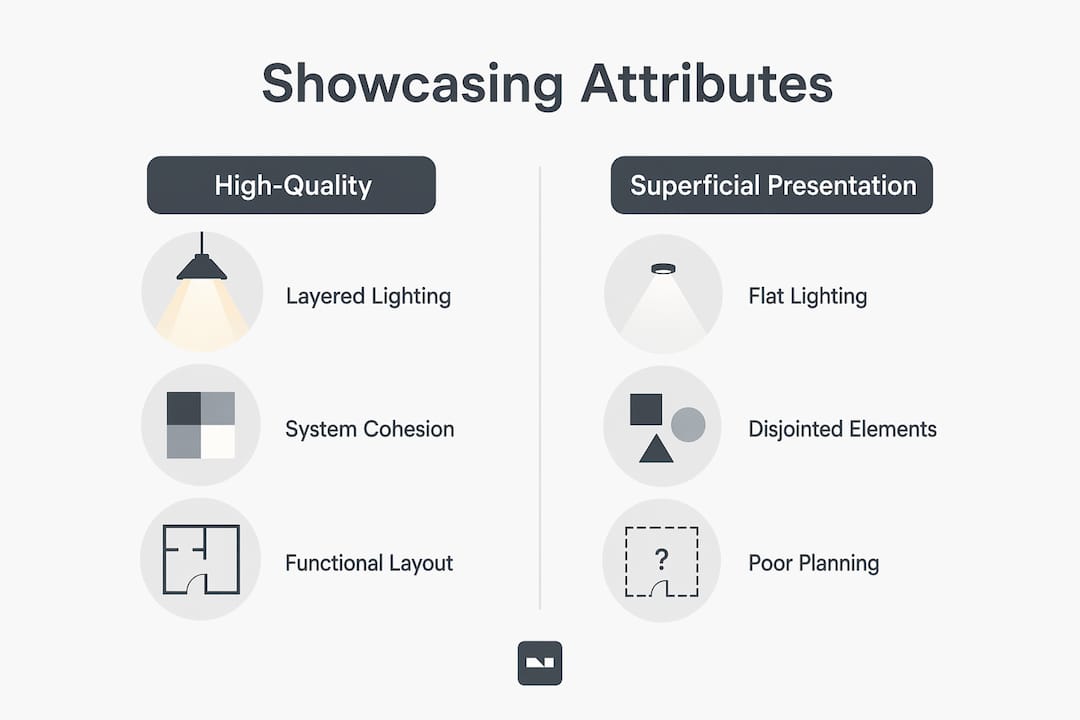
The following attributes define what separates genuine quality from superficial presentation:
- System-level cohesion: Balance, rhythm, and visual repetition across materials, colors, and forms create a space that feels resolved rather than assembled.
- Functional planning: Traffic flow and spatial proportions matter as much as aesthetics. Minimum 36-inch walkways are the standard for main circulation paths in quality interiors.
- Material performance: Finish quality and durability benchmarks, such as upholstery double rub counts, determine whether materials hold up under real use, not just under studio lighting.
- Layered lighting: Ambient, task, and accent layers with consistent color temperature support both function and atmosphere. Lighting is not decorative. It is structural.
- Curated focal points: Effective showcasing uses what designers call “hero moments,” curated focal points designed to capture attention and convey value within a controlled environment of lighting and materials.
- Emotional storytelling: The highest standard of showcasing creates emotional resonance beyond physical representation, making the viewer feel the atmosphere and lifestyle of the space, not just document its contents.
Here is how high-quality showcasing compares to superficial presentation:
| Attribute | High-quality showcasing | Superficial presentation |
|---|---|---|
| Lighting | Layered, color-consistent, planned | Single source, uncontrolled |
| Materials | Performance-rated, cohesive | Trend-driven, mismatched |
| Spatial planning | Clearances met, flow mapped | Furniture placed by eye |
| Visual focus | Curated hero moments | No clear focal point |
| Emotional impact | Atmosphere and lifestyle conveyed | Features listed visually |
Pro Tip: Before photographing or presenting any interior, identify one hero moment per room. This is the single view that communicates the room’s purpose and mood in one frame. Build your staging and lighting around it.
How to showcase interiors across photography and digital platforms
Applying quality standards to the physical space is only half the work. How you capture and distribute that space determines whether the quality reads on screen, which is where most audiences encounter interiors today.
-
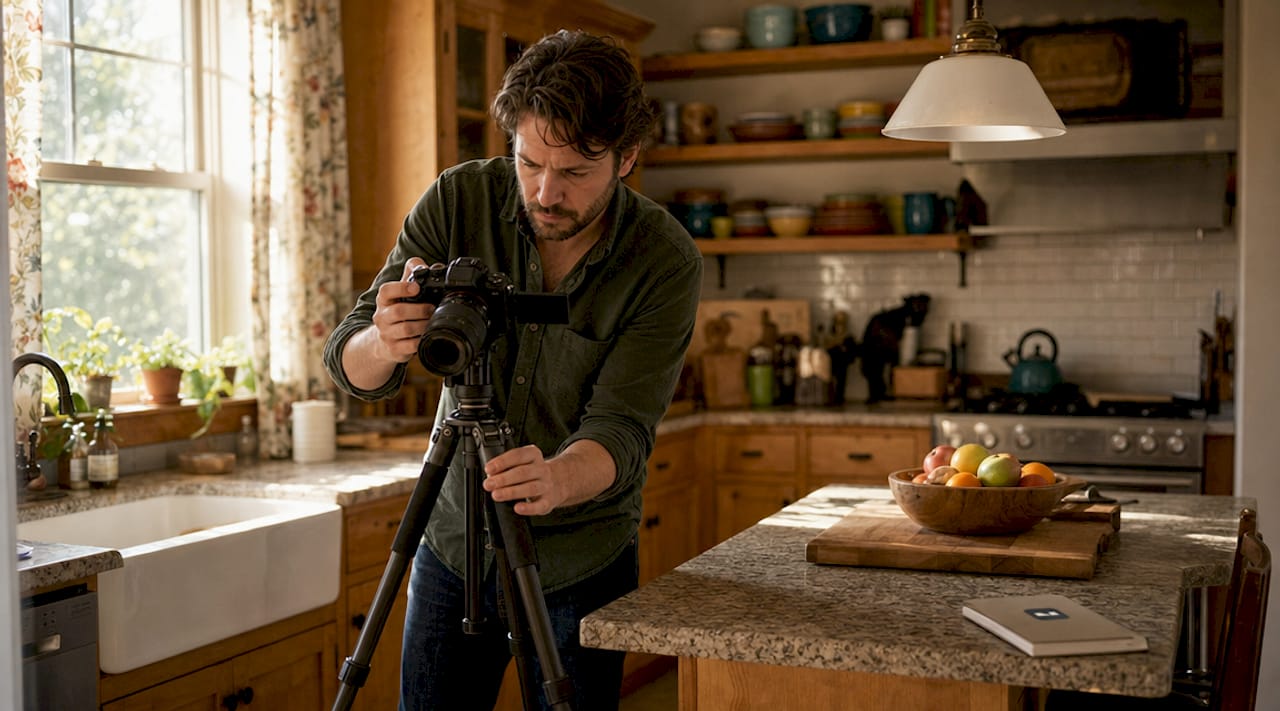
Prepare your lighting environment first. Set all interior lights at least 30 minutes before shooting to allow bulbs to reach consistent color temperature and warmth. Cold or flickering bulbs ruin color accuracy in ways that are difficult to correct in post-production.
-
Control your window treatments. Mixed light sources without professional blending, such as uneven window blinds, make spaces look careless on camera. Set all blinds or sheers to the same position in every room before you shoot.
-
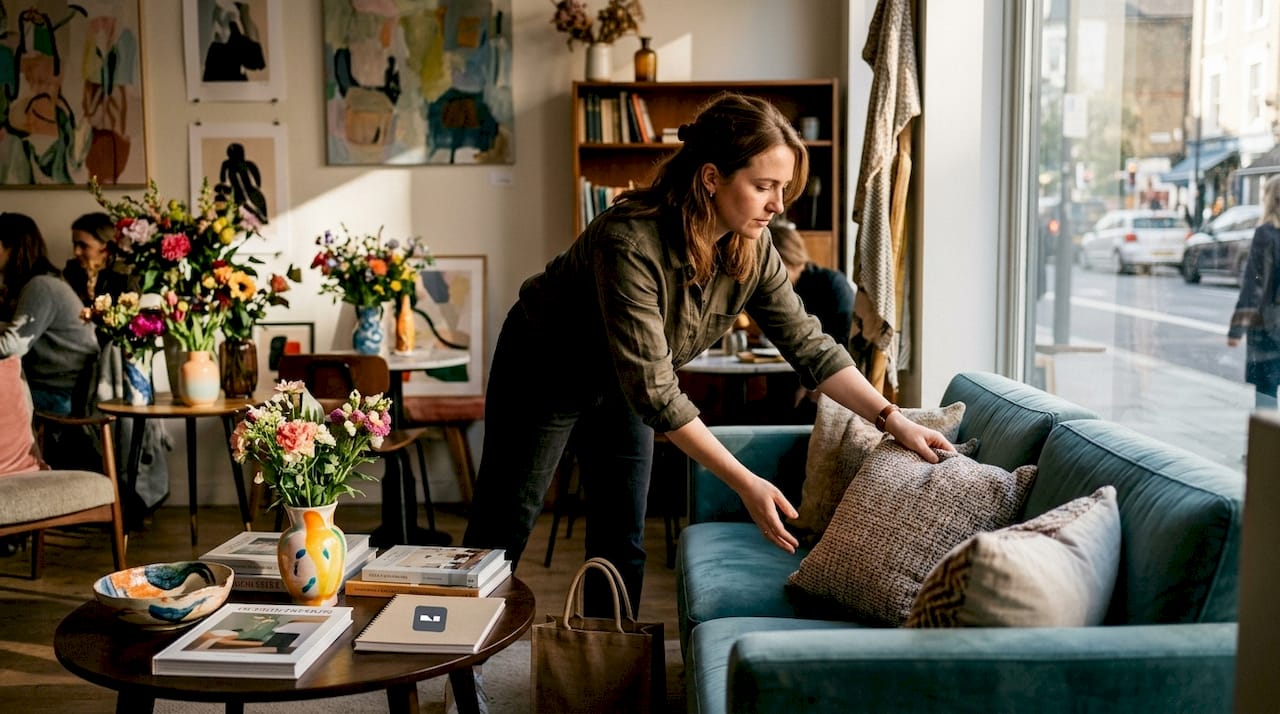
Stage for lived-in, not sterile. A showroom that looks untouched reads as cold and uninviting. Add a book on the coffee table, a folded throw on the sofa, or a half-filled glass on the kitchen counter. The goal is curated realism, not perfection.
-
Match your aspect ratio to your platform. For optimal engagement, use platform-specific ratios: 3:2 or 16:9 for websites, 4:5 for Instagram feeds, 9:16 for Reels and TikTok, and 2:3 for Pinterest. Cropping an image incorrectly for a platform signals amateur presentation before anyone reads a caption.
-
Use AI editing tools to close the gap. Not every home improver has access to a professional photographer or a lighting rig. AI-powered photo editors can adjust color temperature, correct mixed lighting, and enhance material textures in seconds. Vibemyflat, for example, lets you describe the change you want in plain language and delivers professional results without requiring technical skills. You can find more on editing interior photos to understand what is achievable with the right tools.
Pro Tip: Shoot from a corner of the room at roughly chest height, not eye level. This angle captures more floor and ceiling, giving viewers a stronger sense of spatial volume and proportion.
Why execution discipline defines the final result
A design can be beautiful on paper and mediocre in reality. The gap between the two is execution discipline, and it is the most underestimated factor in high-quality interior showcasing.
Construction realities like cabinetry tolerances, plumbing transitions, and HVAC placement directly affect whether a design can be built accurately per its plans. When these details are not coordinated in advance, the result is visible compromises: gaps at cabinet edges, awkward pipe covers, or lighting fixtures that sit off-center relative to the furniture below them.
- Buildability matters: A design that cannot be executed precisely is not a quality design, regardless of how it renders in a mood board.
- Detail transitions reveal craft: The quality of a space is most visible at the joints. How cabinetry meets the ceiling, how tile transitions to hardwood, how a light fixture aligns with the architectural axis of a room. These are the details that separate professional from amateur.
- Lighting uniformity protects visual integrity: Uneven lighting across a room creates shadows that undermine the sense of order and calm that quality showcasing depends on. This requires technical planning, not just aesthetic preference.
- Documentation discipline: Quality interiors are built from precise drawings and specifications. Spaces that skip this step accumulate small errors that compound into a final result that looks slightly off, even when individual elements are expensive.
“Clients often confuse expensive materials with quality. True quality lies in system integration, buildability, and execution discipline.” — Interior Design Principles
The practical implication for home improvers is this: before you invest in new materials or furniture, audit the execution quality of what you already have. Fix the gaps, align the fixtures, and control the lighting. The improvement in how your space reads, both in person and on camera, will be immediate.
Practical interior showcasing tips you can apply today
You do not need a design degree or a renovation budget to raise the showcasing quality of your home. These steps apply whether you are preparing for a listing, a portfolio, or simply want your space to look its best on camera.
-
Map your functional layout. Walk every main path in your home and check for clearances. The 36-inch minimum for walkways is not just a design rule. It is a visual cue that a space is well-planned and comfortable.
-
Select materials for durability and cohesion. In high-traffic areas, choose finishes that perform under use. A scratched or worn surface photographs poorly and signals neglect, regardless of its original quality.
-
Layer your lighting. Replace single overhead fixtures with a combination of ambient, task, and accent sources. Consistent color temperature across all sources, ideally 2700K to 3000K for living spaces, creates warmth and visual unity. The lighting tips for interior photos resource from Vibemyflat covers this in practical detail.
-
Style with restraint. Curate accessories in odd numbers, vary heights, and leave negative space. A shelf with three well-chosen objects reads as intentional. The same shelf with twelve objects reads as storage.
-
Prepare your space before any photography session. Remove personal clutter, align all window treatments, and set your lighting at least 30 minutes before shooting. These three steps alone will raise the quality of your images significantly.
-
Edit your photos with purpose. Use AI-based tools to correct color temperature, adjust exposure, and enhance material textures. Avoid over-filtering, which creates an artificial look that undermines the credibility of the space. For a structured approach, the interior visualization guide provides a solid framework for both physical and digital presentation.
Pro Tip: Group accessories by material or color family rather than by category. A ceramic vase, a linen book, and a stone tray share a neutral palette and create cohesion. Three ceramic vases just look like a collection.
Key takeaways
High-quality interior showcasing succeeds when functional planning, material performance, layered lighting, and precise execution combine with purposeful visual storytelling across every medium where the space is seen.
| Point | Details |
|---|---|
| System cohesion over individual items | Quality reads as a whole, not as a sum of expensive parts. |
| Lighting is structural, not decorative | Layer ambient, task, and accent sources with consistent color temperature. |
| Execution discipline protects design intent | Buildability and detail transitions determine whether quality survives construction. |
| Platform-specific image ratios matter | Use 4:5 for Instagram, 9:16 for Reels, and 3:2 for websites to maximize visual impact. |
| Hero moments anchor every room | Identify one curated focal point per room and build staging and lighting around it. |
What I have learned about showcasing that most guides skip
Most articles on interior showcasing focus on what to buy or how to arrange furniture. The more useful question is what to remove and what to fix before you add anything new.
In my experience, the spaces that photograph best and impress visitors most are not the ones with the most design investment. They are the ones where someone has done the unglamorous work: aligned the lighting, fixed the transitions, cleared the clutter, and made deliberate decisions about what stays in frame. The emotional impact that high-quality showcasing creates does not come from a single statement piece. It comes from the absence of visual noise.
The shift toward digital showcasing has raised the stakes considerably. A space that looks acceptable in person can look chaotic on a phone screen if the lighting is uncontrolled or the styling is inconsistent. Conversely, a modest space with good light, clean lines, and one strong focal point can look genuinely impressive in a well-composed photograph. The gap between perceived and actual quality is almost always a photography and preparation problem, not a budget problem.
If you take one thing from this: prepare your space as if the camera is the most demanding guest you will ever host. It notices everything, forgives nothing, and tells the story you give it.
— Hello
Transform your interior photos with Vibemyflat
Knowing the standards for quality interior showcasing is one thing. Applying them to your photos without professional equipment is another challenge entirely.
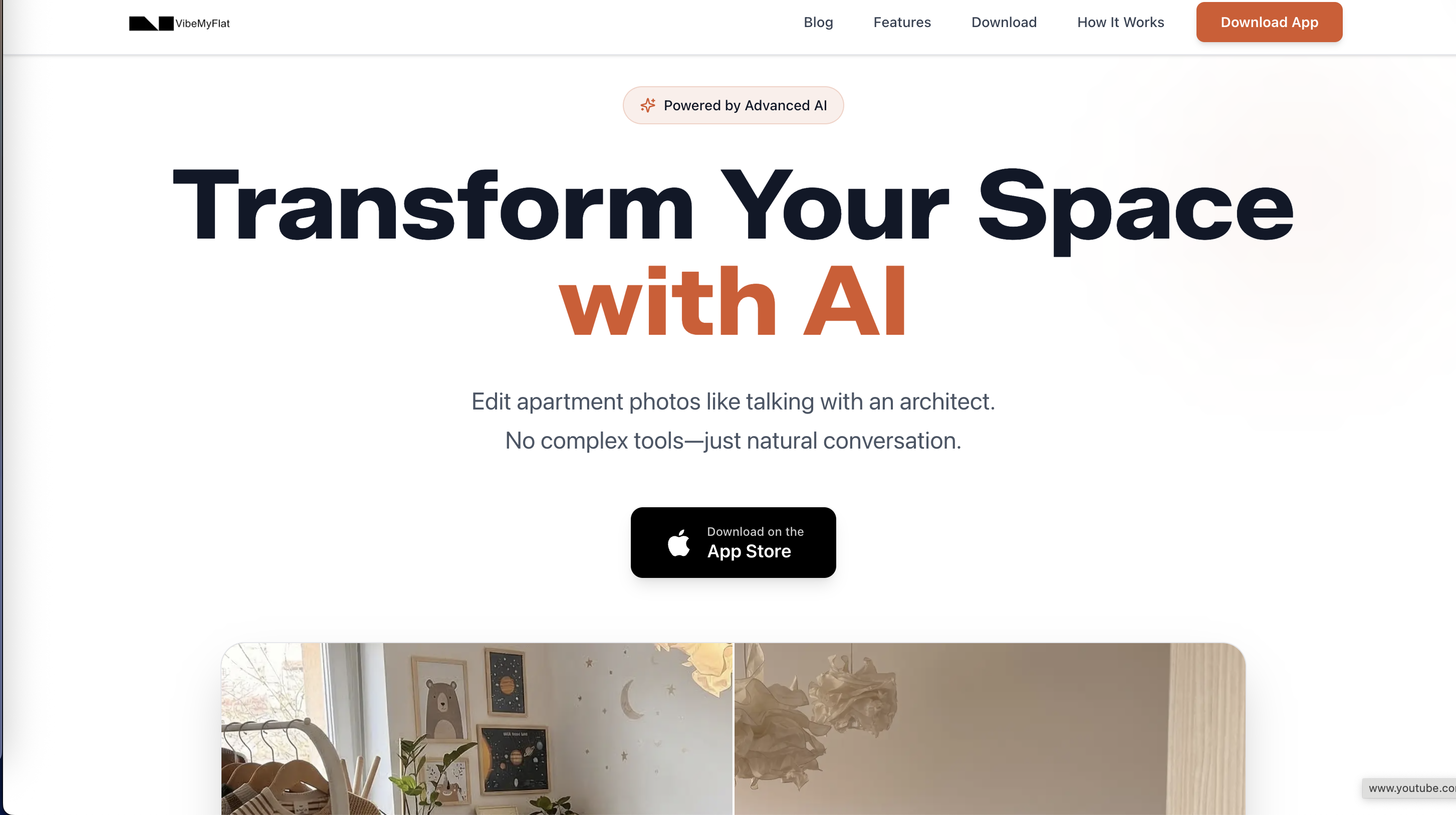
Vibemyflat is an AI-powered photo editor built specifically for interior and apartment images. You describe what you want in plain language, such as warmer lighting, a different wall color, or a cleaner material texture, and the platform delivers professional-quality results in under 30 seconds. No technical skills required. It works across web, iOS, and Android, making it accessible whether you are preparing a property listing, planning a renovation, or simply want your home to look its best on social media. Try the Vibemyflat AI editor and see what your space looks like at its best.
FAQ
What does high-quality interior showcasing mean?
High-quality interior showcasing is the deliberate presentation of interior spaces that integrates functional layout, material performance, layered lighting, and visual storytelling into a cohesive system. It goes beyond expensive materials to create emotional resonance and spatial clarity.
What are the most important features of quality interior design?
The most important features are system-level cohesion, layered lighting with consistent color temperature, functional spatial planning with proper clearances, and curated focal points that guide the viewer’s attention through the space.
How do I showcase interiors effectively for social media?
Use platform-specific aspect ratios: 4:5 for Instagram feeds, 9:16 for Reels and TikTok, and 2:3 for Pinterest. Set all interior lights 30 minutes before shooting and control window treatments to avoid mixed light sources that reduce image quality.
Why does execution quality matter in interior showcasing?
Poor execution, such as misaligned cabinetry, inconsistent lighting, or unresolved material transitions, creates visual noise that undermines the perceived quality of even expensive interiors. Quality is most visible at the detail level, not in the overall impression.
Can I improve my interior showcasing without a professional photographer?
Yes. Controlling your lighting environment, staging with restraint, and using AI-based photo editing tools like Vibemyflat can close most of the gap between amateur and professional results without specialized equipment or technical knowledge.