Why interior photos make or break your listings
Why interior photos make or break your listings

TL;DR:
- Most home buyers start their search online, making interior photos the primary impression that influences their interest. High-quality, well-lit images generate faster responses and more offers, emphasizing the importance of professional editing and staging. AI and virtual staging tools can enhance visuals responsibly when disclosure is clear, boosting engagement and trust.
Before you spend another dollar on a property description or a targeted ad campaign, consider this: 97% of home buyers start their search online, which means a set of interior photos is almost always the first — and sometimes only — impression you get to make. Not your price point. Not your neighborhood write-up. Your photos. This article breaks down the psychology and data behind visual marketing in real estate, the costly mistakes agents still make every day, and the practical strategies that connect strong visuals to faster closings and better offers.
Table of Contents
- The science behind first impressions in property marketing
- Why quality photos outperform basic snapshots
- The risks and rewards of AI and virtual staging
- From listings to closings: Turning visual engagement into results
- A fresh perspective: Why great interior photos are your negotiating power
- Take your property marketing to the next level
- Frequently asked questions
Key Takeaways
| Point | Details |
|---|---|
| First impressions dominate | Interior photos are the top factor shaping buyer interest online. |
| Quality boosts results | Professional photos attract more views and speed up property sales. |
| AI tools require caution | Virtual staging demands transparency to maintain buyer trust and comply with laws. |
| Staging has real ROI | Well-staged interiors can increase offers and make homes sell faster, especially vacant properties. |
| Visuals drive decisions | Effective interior photos move buyers from browsing to making offers. |
The science behind first impressions in property marketing
Think about the last time you scrolled through a listing platform. You didn’t stop to read the description first. You looked at the photos. Buyers do the same thing, and research confirms it. The fact that 97% of home buyers search online first means every listing lives or dies by the quality of its visual package before a single word gets read.
The psychology here isn’t complicated. Human brains process images roughly 60,000 times faster than text. When a buyer opens a listing, they form a gut feeling about whether they’d want to live there within the first few seconds. That gut feeling is entirely driven by visual cues: how bright the kitchen looks, whether the living room feels spacious, how comfortable the bedroom appears. A dull, poorly lit photo immediately signals neglect — even if the property itself is spotless.
“Interior photos are not decoration on a listing. They are the listing. Everything else — price, square footage, neighborhood data — only gets read after the photos have already made the emotional case.”
What does this mean practically? Listings with inviting, well-composed interior shots generate significantly more clicks on property portals, which leads to more showing requests, which leads to faster offers. Getting the lighting design right inside a space is not a cosmetic concern. It directly influences how warm or cold, large or cramped a room feels in a photo, and those perceptions drive buyer behavior at every step of the funnel.
Key takeaways from buyer behavior research:
- Buyers decide whether to keep scrolling or click through in under three seconds
- Warm, natural lighting increases perceived square footage and livability
- Clutter-free, staged spaces create aspirational appeal that drives emotional investment
- Photos of kitchens and primary bedrooms carry the most weight in buyer decisions
With this statistical foundation, let’s look closer at how buyer behavior is shaped by interior visuals.
Why quality photos outperform basic snapshots
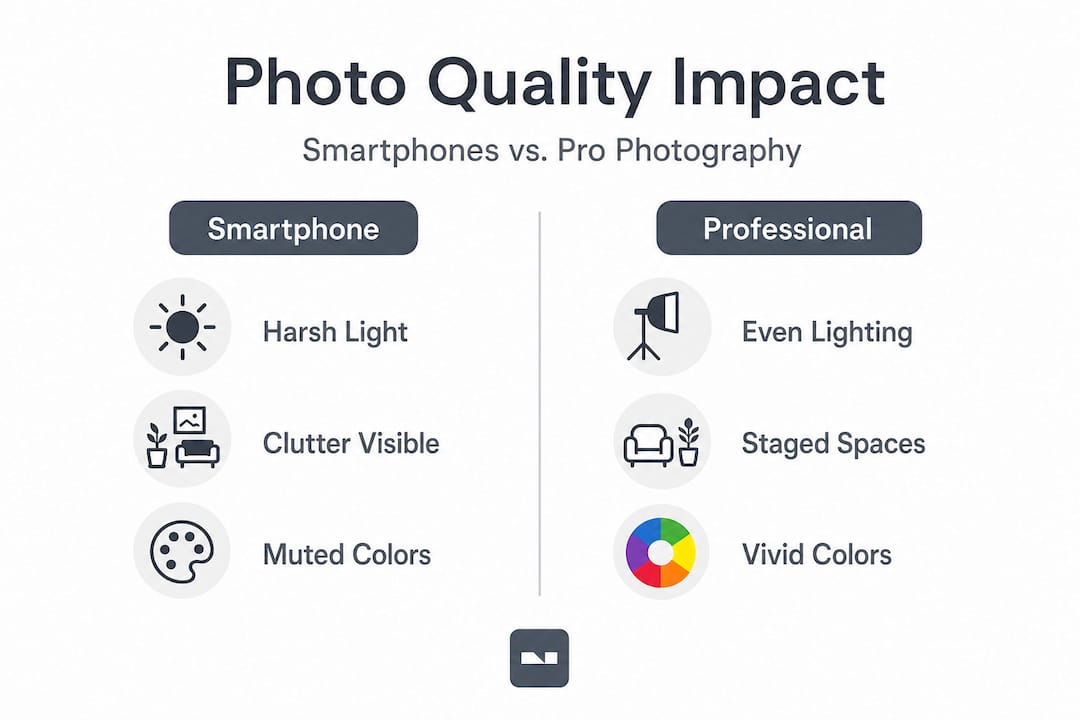
There is a clear, measurable difference between a smartphone photo snapped in a rush and a properly composed, well-lit interior image. That difference shows up directly in listing performance. 83% of buyers rank photos as the single most useful feature on any real estate website. Not the virtual tour. Not the floor plan. The photos. That number alone should reshape how you allocate your marketing budget.
Agents who invest in high-quality visuals consistently report shorter time on market and stronger initial offers. Understanding professional editing benefits means recognizing that post-processing is not about making a property look fake. It’s about making it look its best — the same way a well-staged showroom makes a furniture purchase feel easier and more exciting.
Comparison: Smartphone snapshots vs. professional-quality images
| Factor | Smartphone snapshot | Professional-quality image |
|---|---|---|
| Lighting | Uneven, shadows common | Balanced, natural, warm |
| Composition | Furniture cuts off, walls slope | Wide-angle, full room visibility |
| Editing | Minimal or none | Color correction, clarity enhancement |
| Buyer impression | Feels rushed, uninviting | Feels move-in ready, aspirational |
| Click-through rate | Below average | Noticeably higher |
| Time on market | Longer average | Shorter average |
The most common DIY photo mistakes you need to avoid:
- Shooting toward windows — This blows out the background and silhouettes the room. Position yourself so windows are to the side or adjust exposure in post.
- Not staging first — Unmade beds, dishes on the counter, and visible cords immediately drop perceived value.
- Using vertical framing — Horizontal framing fills listing thumbnails correctly and shows more of each room.
- Too little light — Dim photos read as gloomy spaces. Combine natural light with interior lights on during the shoot.
- Single-angle coverage — One photo per room leaves buyers guessing about layout. Shoot from at least two corners per room.
Understanding photo editing and staging ROI shows that even modest improvements to image quality can compound into measurable financial gains over a selling season.
Pro Tip: Always shoot a room immediately after the morning light hits it from the front of the house. Natural light at that angle tends to fill spaces evenly without harsh shadows, giving you a warm, inviting base to work with before any editing.
Seeing what makes a photo powerful, it’s crucial to understand exactly how photo quality impacts marketing outcomes.
The risks and rewards of AI and virtual staging
AI and virtual staging have changed the marketing toolkit available to agents and property managers. The results can be dramatic. AI and virtual staging boosts views by up to 40% compared to vacant room photos, which is not a trivial number when you’re competing against dozens of similar listings on the same platform.
But the rewards come with real responsibilities. California’s 2026 regulations now require that any AI-generated or virtually staged listing photo be clearly disclosed and supported by multi-angle images. This is a direct response to a growing problem: buyers arriving at showings to find a property that looks nothing like the listing they clicked on. The disconnect erodes trust and can derail deals before negotiation even starts.
Overview of AI staging benefits and risks:
| Aspect | Benefit | Risk |
|---|---|---|
| Vacant listings | Furnishes empty rooms instantly | Misleads if style doesn’t match true scale |
| Speed | Results in under a minute | Fast output can mean inconsistent quality |
| Cost | Fraction of physical staging costs | May require multiple revisions |
| Compliance | Allows creative visualization | Must disclose AI use in listed states |
| Buyer trust | Increases initial engagement | Drops sharply if onsite reality differs |
Using AI workflow strategies smartly means treating the technology as an enhancement tool, not a replacement for accurate representation. The best use case for AI staging is vacant properties where you want buyers to see the potential of a space without the cost of physical furniture rentals.
There’s also a privacy dimension many agents overlook. When digitally staged images are shared widely on listing platforms, social media, and aggregator sites, personal details embedded in room photos — like artwork, visible mail, or identifiable objects left by previous owners — can persist in archives long after the sale closes. Always review images for personal identifiers before publishing.
Best practices for responsible AI staging:
- Always label AI-staged photos clearly in the listing description
- Pair every AI-generated image with an unstaged version for comparison
- Use multi-angle shots to prevent perception gaps between digital and physical
- Review AI photo enhancement tools that prioritize realistic outputs over stylized renderings
- Audit images for unintended personal information before going live
Pro Tip: If you’re listing in a state that already mandates disclosure, create a simple standard disclosure line you append to every AI-staged listing. It takes five seconds and protects you from compliance issues while building trust with buyers who appreciate transparency.
With digital tools rising, let’s explore the impact — positive and negative — of AI and virtual staging on marketing trust.
From listings to closings: Turning visual engagement into results
Photos don’t just attract clicks. They build the emotional case that makes a buyer pick up the phone and schedule a showing — or, better yet, submit an offer before ever stepping inside. That emotional connection is built through a consistent visual story that guides the buyer from the thumbnail to the front door and into the negotiation.

Staging ROI typically runs between 5% and 15%, but the data also shows that vacant properties benefit the most because they give buyers no reference point for scale, warmth, or livability. A beautifully edited photo of a staged living room tells a buyer: this space works, this lifestyle is achievable, this home is ready for you. That story is nearly impossible to tell with an empty room.
However, the same research underscores a real risk: over-edited photos that look polished to the point of being unrealistic actually reduce credibility. Buyers who feel a listing looks “too perfect” apply more skepticism when they show up in person. If the actual space can’t live up to the visual promise, you’ve done more harm than good.
Step-by-step visual strategy across the sales funnel:
- Thumbnail competition — Your lead photo needs to be the kitchen or living room at its most inviting. This is your click bait, and it should be your best shot.
- Gallery sequence — Move buyers through the home logically: living areas, kitchen, dining, primary bedroom, bathrooms, secondary rooms, outdoor spaces. This mirrors the natural walkthrough experience.
- Lifestyle anchors — Include at least one photo that captures how a space feels in use: a set breakfast table, a cozy reading corner. These details create emotional resonance.
- Detail shots — Finishes, hardware, appliances, and architectural features close the gap between interest and genuine desire. Buyers who notice these details mentally move in before they ever visit.
- Follow-up use — Strong listing photos extend beyond the MLS. Use them in email campaigns, social media, and presentation decks to keep interested buyers visually engaged between touchpoints.
Elevating your property visuals means thinking beyond the initial click and using images strategically at every stage of the buyer journey.
Practical reminders before any listing goes live:
- Remove personal items, excess furniture, and anything that would distract from the space itself
- Turn on every light in every room — overhead fixtures, table lamps, under-cabinet lighting
- Open all blinds and curtains to maximize natural light
- Check corners and baseboards for visible dust or scuffs that the camera will amplify
- Photograph on a clear day and time the shoot for the best natural light angle
Now, discover how to maximize photography investments for real ROI through the full arc of the selling process.
A fresh perspective: Why great interior photos are your negotiating power
Most guides stop at first impressions. Here’s what they don’t say: the impact of great interior photography does not stop when a buyer clicks through or even when they schedule a showing. It continues straight into the negotiation.
When a listing has a strong, consistent visual identity — high-quality images, honest representation, professional-grade editing — it signals something deeper to buyers and their agents. It signals that the seller is serious, that the property is well-maintained, and that the asking price has been thought through. That perception quietly shifts the negotiating dynamic before a single counter-offer is made. Buyers are less likely to open with a low-ball figure when the property “looks” like it’s worth what you’re asking.
There’s also the appraisal angle. Appraisers increasingly reference listing photos as part of documenting condition at the time of sale. Properties with polished, accurate visuals leave a paper trail of perceived quality. That matters when a deal gets close to contract and someone needs to justify the number.
Here’s the counter-intuitive part: the best agents we’ve seen are not the ones using the most technology. They’re the ones who know when not to. They understand that the value of professional editing lies in accuracy and clarity, not in dramatic transformations. AI tools and virtual staging are genuinely powerful — but the agents who win negotiations are the ones who use them to reveal a property’s real strengths, not manufacture qualities that don’t exist.
Authenticity, when paired with skill, beats digital perfection every single time.
Take your property marketing to the next level
You now know the data, the psychology, the risks, and the strategies. The next step is execution — and that’s where the right tools make all the difference. Whether you’re editing a single listing or managing a portfolio of rental properties, the gap between a good photo and a great one is often just a few targeted adjustments away.

VibeMyFlat gives real estate agents and property managers a fast, intuitive way to enhance interior photos without needing design experience or complex software. Simply describe the changes you want in plain language — adjust the lighting, refresh the wall color, clean up the background — and the platform delivers professional-quality results in under 30 seconds. It works across web, iOS, and Android, so you can edit on the go between showings. If you’re serious about turning better photos into better outcomes, it’s the practical next step after everything you’ve just read.
Frequently asked questions
What makes interior photos more important than exterior shots?
Interior photos reveal the livability and layout of a space, which matter most to buyers making decisions online. Since 97% of home buyers search online first, interiors are the primary factor in whether a showing ever happens.
How many photos should be included for the best results?
At least 15 to 25 interior photos is the recommended range to cover all major living spaces and maximize buyer engagement. Fewer photos leave gaps in the visual story and reduce time spent on your listing.
Is AI or virtual staging allowed in all regions?
Regulations vary by market, and California’s 2026 rules now specifically require clear disclosure and multi-angle image support whenever AI staging is used. Always check local and state regulations before publishing AI-generated images.
Can professional photo editing actually speed up a sale?
Yes, consistently. 83% of buyers rank photos as the most useful feature on any listing website, and properties with professionally edited images attract more views, more showings, and stronger initial offers.
Are photos more important than virtual tours?
Photos remain the single most decisive factor in initial buyer interest, even as virtual tours grow in use. 83% of buyers prioritize photos above every other website feature, including interactive tours, making them the foundation of any effective listing strategy.